
Fountain spleenwort
Asplenium fontanum
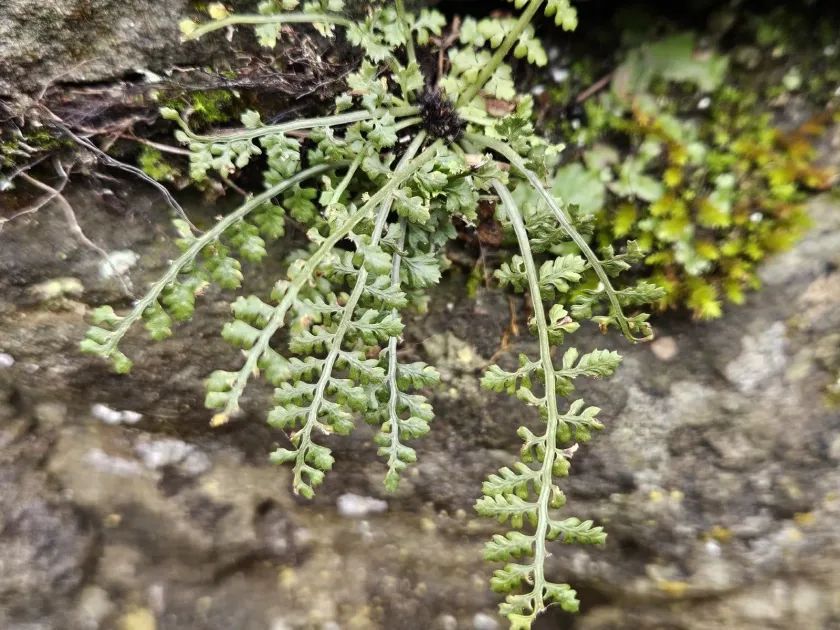
Description
Growing requirements
Fountain spleenwort (Asplenium fontanum) is a perennial evergreen fern belonging to the Aspleniaceae family. It is native to the mountain ranges of Europe, where it thrives in cool, humid, and shady rocky crevices, typically growing on limestone substrates.
For successful gardening, it is essential to provide well-draining soil that mimics the mineral-rich environment of its natural habitat. Adding limestone chips to the planting mix is highly recommended to maintain the pH levels preferred by the species.
The plant thrives in partial to full shade. Direct exposure to intense sunlight will scorch the delicate fronds and dehydrate the plant quickly. A sheltered spot in the rock garden or a cool, humid greenhouse is ideal for its development.
Consistent moisture is key to the health of Asplenium fontanum. While it requires damp soil, it is vital to avoid waterlogging, which can cause crown rot. Regular but light watering is preferred over infrequent, heavy irrigation.
In landscaping, this fern is highly valued for its elegant, arching fronds and compact habit. It is an excellent choice for rock gardens, fern walls, and container gardening where its delicate foliage can be displayed prominently.
Main diseases and pests
The primary threats to Fountain spleenwort are fungal diseases, particularly those affecting the root system. These are almost always a result of poor drainage or overwatering, which creates a low-oxygen environment for the roots.
Slugs and snails are the most common pests, as they are attracted to the succulent-like fronds of the fern. Their feeding can quickly disfigure the plant, so monitoring during wet seasons is essential for plant protection.
In indoor or greenhouse environments, aphids and spider mites can sometimes infest the foliage. These pests can be managed by washing the leaves with a gentle stream of water or using horticultural oils to control populations.
To prevent disease outbreaks, ensuring good air circulation is paramount. Densely planted areas should be avoided to prevent stagnant humidity, which acts as a catalyst for fungal spore growth on the fronds.
If fungal infections like powdery mildew or leaf spot are detected, affected fronds should be promptly removed. Applying a mild organic fungicide can help recover the plant if the infection is spotted in its early stages.