
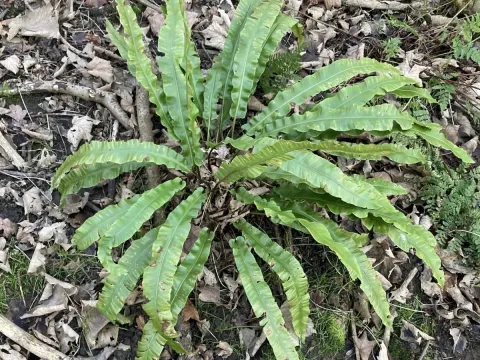
Hart's-tongue fern
Asplenium scolopendrium
Hart's-tongue fern (Asplenium scolopendrium) is a distinctive member of the Aspleniaceae family, known for its long, undivided, tongue-shaped fronds that remain evergreen in many climates.
What the section contains
Hart's-tongue fern
The plant originates from Europe, North America, and parts of Asia, typically occupying limestone-rich habitats, damp shaded woods, and cool rock crevices where moisture is constant.
For successful agricultural production, growers must provide a substrate with a neutral to alkaline pH, incorporating lime or crushed limestone to mimic the fern's natural calcium-rich environment.
The climate requirements include high humidity levels and protection from freezing winds, as the plant prefers stable, cool-to-temperate conditions rather than extremes of heat or drought.
Light management is crucial; this fern requires low-to-medium light levels, as direct sunlight causes irreversible tissue damage to the fronds, leading to rapid wilting and necrosis.
Common pathological threats include fungal infections such as Phyllosticta leaf spot, which manifests as brown circular lesions, spreading rapidly in stagnant air conditions.
Pest pressure is frequently driven by scale insects, which hide on the underside of fronds near the midrib, making them difficult to detect until the plant exhibits signs of decline.
Slugs and snails can also cause significant damage to the young emerging fronds, especially in nursery settings where humidity levels are kept at a high constant level.
Cultural control, such as maintaining proper spacing between plants and ensuring efficient airflow, remains the most effective strategy for preventing the onset of major diseases.
Integrated pest management should focus on early manual removal of pests and the application of mild horticultural oils or soaps before resorting to systemic chemical treatments.