
Hanging Spleenwort
Asplenium flaccidum
Description
Growing requirements
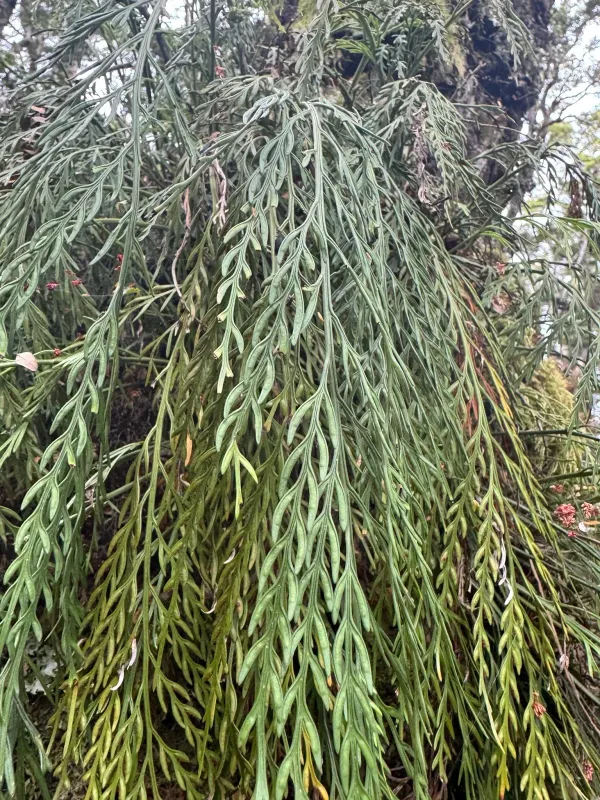
Hanging Spleenwort (Asplenium flaccidum) is an epiphytic fern belonging to the Aspleniaceae family. Native to New Zealand, Australia, and parts of the Pacific islands, it is well-known for its distinctive drooping, leathery fronds that can extend significantly in length.
Botanically, this plant thrives in the humid, shaded environments of temperate and subtropical rainforests. Its fronds are deeply divided and have a dark green, glossy appearance, providing a high ornamental value for indoor collections and botanical greenhouses.
Regarding climatic requirements, the plant prefers consistent moderate temperatures, ideally between 18°C and 22°C. It is highly sensitive to extreme heat and cold, and it should be shielded from direct, intense sunlight which can easily scorch its delicate foliage.
The soil substrate must be exceptionally well-draining, mirroring the epiphytic nature of the fern. A mix of peat moss, pine bark, and perlite is recommended to ensure that the roots have access to oxygen while maintaining the necessary humidity levels.
Watering practices should prioritize consistency; the medium should remain moist but never waterlogged. High humidity is essential, and growers often use misting systems or pebble trays to prevent the frond tips from turning brown due to dryness.
Main diseases and pests
Common threats to Asplenium flaccidum include scale insects, which often attach themselves to the stems and frond bases. These pests can significantly weaken the plant if not detected and treated with systemic insecticides or horticultural oils.
Mealybugs are another frequent issue, thriving in the dense, shaded areas of the frond rosettes. Manual removal using cotton swabs dipped in isopropyl alcohol is often effective for minor infestations on ornamental specimens.
Spider mites represent a significant risk when ambient humidity levels drop too low. Growers should inspect the underside of the fronds regularly, as these pests cause chlorotic spotting and stunted growth during dry interior conditions.
Root rot, driven by overwatering and poor drainage, is the most lethal condition for this species. Once the root system is compromised, the foliage will lose turgor pressure and collapse, often signaling an irreversible stage of decay.
Fungal leaf spot diseases may occur if the foliage remains wet for extended periods in areas with stagnant air. Improving ventilation and avoiding overhead irrigation are critical strategies to maintain the health and vigor of the plant.