
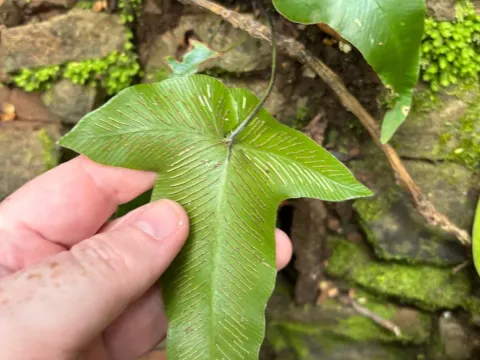
Ivy-leaved spleenwort
Asplenium hemionitis
The Ivy-leaved spleenwort (Asplenium hemionitis) is an evergreen fern belonging to the Aspleniaceae family. It is native to the Canary Islands, Madeira, and the Azores, primarily inhabiting humid, shaded rocky slopes and forest environments.
What the section contains
Ivy-leaved spleenwort
The plant is distinguished by its unique leaf morphology, with fronds shaped like ivy leaves, which gives it a significant aesthetic value. It typically grows as a dense, manageable rosette, making it a popular choice for conservatory collections and specialty botanical displays.
Cultivation requires a microclimate that mimics its native environment, specifically high atmospheric humidity and moderate temperatures. It thrives best at temperatures between +18 and +22 degrees Celsius and should be protected from direct sunlight and dry drafts.
The potting medium must be well-draining, airy, and rich in organic matter. A recommended substrate mixture includes peat, horticultural charcoal, and pine bark to ensure the roots remain oxygenated while maintaining necessary moisture levels.
Proper care involves frequent watering with demineralized water, ensuring the medium stays moist but never waterlogged. Regular misting of the fronds is essential, especially in indoor environments where heating systems tend to dry out the air significantly.
Scale insects and mealybugs are the primary pests that affect this species, particularly when plants are stressed by inadequate humidity. These pests can rapidly colonize the undersides of the fronds, causing yellowing and stunted growth.
Fungal pathogens such as root rot frequently occur due to poor drainage or overwatering. Maintaining air circulation around the rosette is crucial to prevent the onset of fungal infections and to ensure the longevity of the plant structure.