
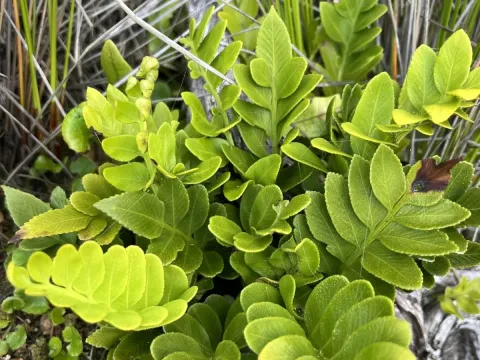
Asplenium obtusatum
Asplenium obtusatum
Asplenium obtusatum is a notable member of the Aspleniaceae family, commonly referred to as the shore spleenwort. It is a perennial fern primarily native to the coastal regions of New Zealand, Australia, and parts of South America.
What the section contains
Asplenium obtusatum
The cultivation of this species requires a stable environment with high atmospheric humidity. As a coastal plant, it is uniquely adapted to saline air but performs best in protected areas where temperature fluctuations are kept to a minimum.
Soil requirements for this fern are quite specific: it demands a well-draining, nutrient-rich substrate that mimics forest humus or rocky crevices. Poor drainage is the leading cause of failure in agricultural settings, as the roots are sensitive to waterlogging.
Regarding light, the plant thrives in shaded or semi-shaded conditions. Intense, direct sunlight should be avoided at all costs to prevent leaf scorch and ensure the characteristic deep green color of the fronds remains intact.
The morphology of the plant features leathery, compound fronds that are highly resilient to physical stress. Its robust nature makes it an interesting subject for specialized botanical collections and controlled nursery environments.
Root pathogens are the primary concern for Asplenium obtusatum growers. Fungal infections thrive when the growing medium remains saturated for too long, leading to a rapid decline in plant health and vitality.
Pests such as mealybugs often hide in the tight intersections of the fronds, making manual removal difficult. These insects can quickly colonize a plant if the surrounding environment is warm and dry, hindering proper development.
Spider mites are another common threat, especially in indoor greenhouse environments. Their presence is usually indicated by mottled, pale leaves, and their proliferation is directly tied to a lack of proper air circulation.
Effective management requires strict adherence to hygiene protocols in the greenhouse. Regularly clearing debris from the base of the plant and maintaining optimal spacing between specimens helps to prevent the spread of diseases.
Chemical control should be used as a last resort. Because of the fern's sensitivity, only products labeled for ornamental ferns should be applied, and even then, at a reduced concentration to avoid toxicity.