
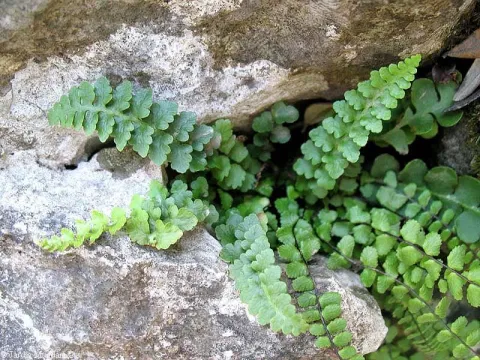
Majorcan Spleenwort
Asplenium majoricum
Majorcan Spleenwort (Asplenium majoricum) belongs to the Aspleniaceae family. This distinct fern is a natural hybrid endemic to the Balearic Islands. In agricultural and horticultural contexts, it is cultivated primarily for its unique morphological characteristics and aesthetic value in ornamental settings.
What the section contains
Majorcan Spleenwort
The plant thrives in partial shade and is sensitive to direct, intense sunlight, which can cause leaf desiccation. It prefers a humid environment with temperatures ranging from 18°C to 24°C, mirroring the Mediterranean climate of its native rocky habitats.
Cultivation requires a specialized growing medium that is highly permeable to air and water. Incorporating crushed limestone or dolomite into the potting mix is essential, as the species is calcicolous and prefers an alkaline to neutral soil pH to maintain healthy foliage.
Good agricultural practices for this fern emphasize careful moisture management. Irrigation should be frequent enough to keep the medium moist but not waterlogged. The use of soft water is recommended to prevent the accumulation of minerals that can alter soil pH levels unexpectedly.
The economic and practical use of Asplenium majoricum is focused on the ornamental trade, particularly for collectors of rare pteridophytes. It is often utilized in greenhouse displays, rock gardens, and specialized indoor terrariums designed to simulate high-humidity, rocky microenvironments.
The main threats to the health of this culture include infestations by spider mites, scale insects, and mealybugs, which are often exacerbated by poor air circulation. Root rot is a common pathological issue triggered by excessively wet soil or insufficient drainage in the potting container.