
Oak fern
Gymnocarpium dryopteris
Description
Growing requirements
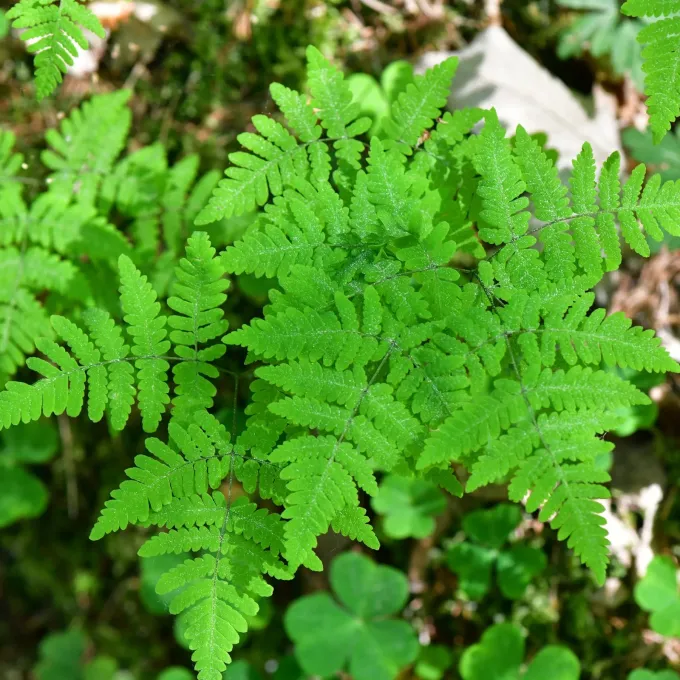
The oak fern (Gymnocarpium dryopteris) is a perennial deciduous fern belonging to the Cystopteridaceae family. It is widely distributed across temperate forest regions of the Northern Hemisphere, where it thrives in moist, shaded environments.
Botanically, the plant is distinguished by its creeping rhizomes that allow it to form extensive colonies. The fronds are delicate, bright green, and have a distinct triangular shape, making them a popular choice for forest-themed landscaping.
Successful cultivation requires soil that is rich in organic matter, consistently moist, and slightly acidic. It is essential to plant the oak fern in a shaded or semi-shaded location to protect the foliage from the scorching effects of direct sunlight.
Maintenance is relatively straightforward: ensure the soil does not dry out completely during the summer. Since the plant is highly hardy, it requires minimal intervention to survive winter conditions, even in colder northern climates.
The primary use of the oak fern is in ornamental horticulture. It is frequently employed by landscape architects to cover the ground beneath large trees or to add texture to rock gardens and north-facing border areas.
Main diseases and pests
The species is generally resistant to most common plant diseases. However, in poorly drained or waterlogged soils, the root system may become susceptible to fungal rot, which can lead to plant decline.
Pests are rarely a major issue for healthy specimens. In some cases, infestations of aphids or spider mites may occur if the plant is grown in areas with insufficient air circulation and prolonged drought stress.