
Maidenhair spleenwort
Asplenium trichomanes
Description
Growing requirements
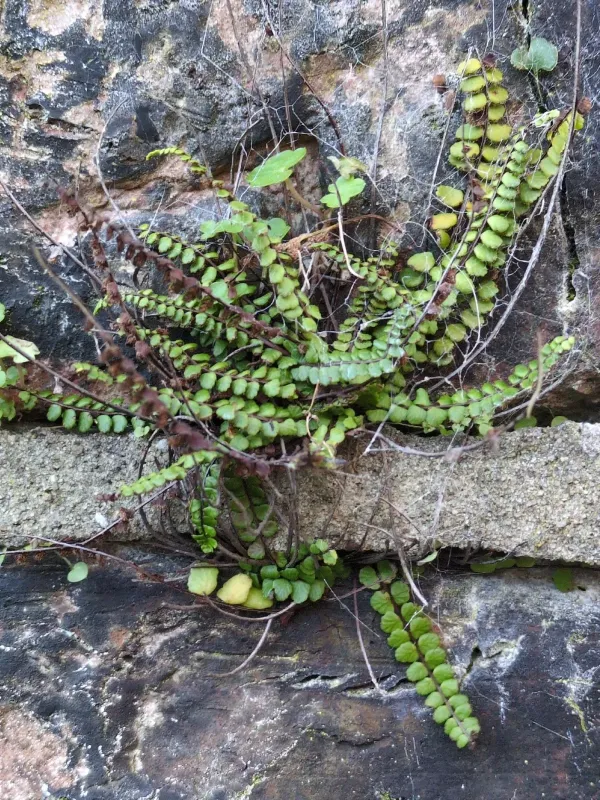
Maidenhair spleenwort (Asplenium trichomanes) is a perennial fern belonging to the Aspleniaceae family. It is widely recognized for its delicate, dark-stiped fronds and its preference for growing in rock crevices and limestone walls.
Native to temperate regions across the globe, this plant is well-adapted to habitats that provide excellent drainage and consistent humidity. In garden settings, it serves as an excellent specimen for rock gardens and dry-stone walls.
The cultural requirements are centered on mimicking its native rocky environment. The substrate should be gritty, well-draining, and contain crushed limestone or mortar rubble to maintain the preferred alkaline pH level.
Regarding light, it thrives in partial to full shade. Direct exposure to strong sunlight can desiccate the fronds, making north or east-facing garden spots ideal for its long-term development.
Maintenance involves providing adequate atmospheric moisture while keeping the root zone moist but not waterlogged. Overwatering is the most common mistake in the cultivation of this species, often leading to crown rot.
Main diseases and pests
The primary pests affecting this fern include slugs and snails, which can quickly consume the tender foliage. Gardeners often use physical barriers or organic baits to manage these populations during the growing season.
Root rot is the most significant disease, usually occurring due to excessive moisture and poor air circulation. Foliar spots and blights can also develop if the plant is kept in an environment with high humidity and stagnant air.
To mitigate these threats, it is crucial to ensure that the crown of the plant is not buried too deeply in the soil. Proper spacing is essential to allow air to flow freely around the fronds and facilitate drying after rain.
Fungal infections can be managed with appropriate fungicides, but prevention through good hygiene—removing necrotic or infected fronds promptly—is always the preferred strategy for maintaining plant health.
Ensuring the plant is not subjected to rapid fluctuations in soil moisture levels will significantly improve its resistance to common pathogens and environmental stressors.