
Northern spleenwort
Asplenium septentrionale
Description
Growing requirements
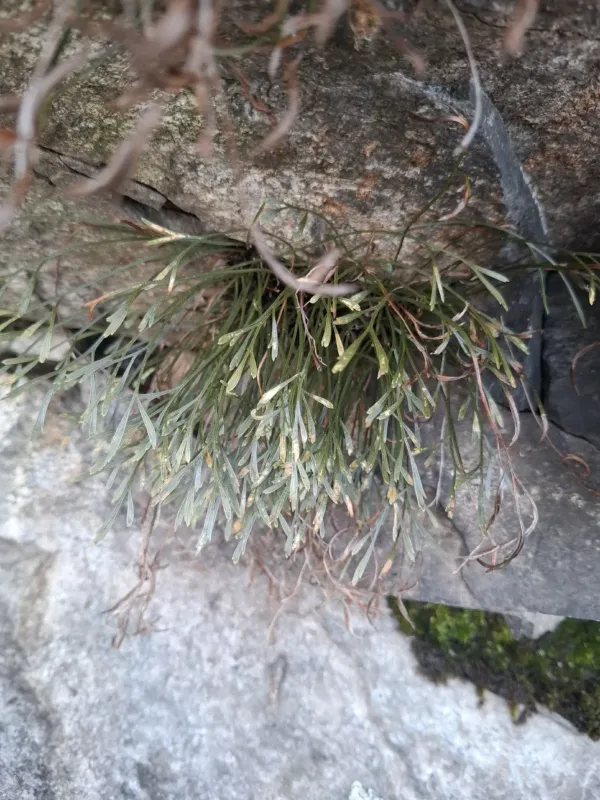
Northern spleenwort (Asplenium septentrionale) is a perennial fern species belonging to the Aspleniaceae family. It is distinct from typical horticultural crops, characterized as a lithophytic fern that thrives in rock crevices and narrow stony fissures.
The plant originates from diverse temperate regions across the Northern Hemisphere. Its natural habitat includes mountainous regions where it displays significant cold hardiness and the ability to grow in extremely low-nutrient environments.
Botanically, the plant features narrow, grass-like fronds that are typically dichotomously divided. Its small, scaly rhizome allows it to anchor firmly onto rocky substrates, ensuring survival in environments where larger vascular plants would fail to establish.
Successful cultivation requires a specialized approach, prioritizing excellent drainage. A substrate consisting of limestone chips, coarse sand, and a minimal amount of humus is ideal. The plant is best suited for rock gardens or specialized alpine containers where environmental conditions can be strictly monitored.
Climatic requirements involve cool, airy conditions with protection from extreme summer heat. While the plant is drought-tolerant once established, it requires consistent atmospheric humidity to keep its foliage healthy and prevent desiccation of the delicate frond tips.
Main diseases and pests
The primary threats to Asplenium septentrionale include fungal pathogens that thrive in waterlogged conditions. Excessive moisture in the root zone is the most common cause of plant failure, as the rhizomes are highly susceptible to rot when kept in damp, heavy soil.
Regarding pests, this species is relatively hardy due to its specialized lifestyle. However, in enclosed or greenhouse conditions, infestations of scale insects or mealybugs may occur. Integrated pest management, focusing on biological controls and proper ventilation, is the preferred method for maintaining plant health.