
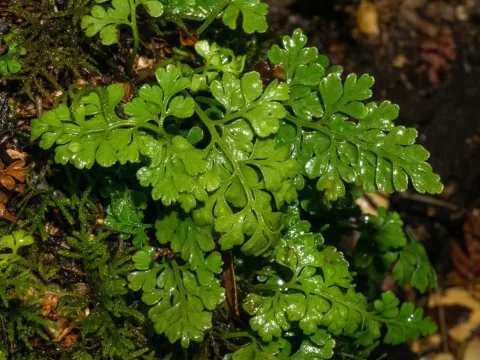
Asplenium dareoides
Asplenium dareoides
Asplenium dareoides is a distinctive member of the Aspleniaceae family, known for its finely divided fronds and compact growth habit. As a perennial fern, it has gained popularity among collectors for its delicate texture and evergreen appearance.
What the section contains
Asplenium dareoides
Originating from the temperate and subtropical regions of the Southern Hemisphere, this species is naturally adapted to moist forest environments. It often grows as an epiphyte on tree trunks or in rock crevices, which dictates its specific environmental needs in cultivation.
The cultural requirements center on providing consistent moisture and high humidity levels. Unlike many other houseplants, this fern thrives in shaded locations with filtered light, as direct sun will quickly dehydrate the delicate leaf structure.
Soil composition is crucial for the health of Asplenium dareoides. It requires a well-draining, slightly acidic substrate that remains aerated. Mixtures involving peat moss, perlite, and pine bark are highly effective in mimicking its natural epiphytic habitat.
Consistent watering using room-temperature water is essential to prevent shock. During the active growth season, the substrate should be kept consistently damp but never waterlogged to ensure the rhizomes do not rot under excessive moisture.
The primary threats to Asplenium dareoides include common indoor pests such as scale insects, mealybugs, and spider mites. These organisms thrive in dry environments and can quickly sap the vitality of the fern's fronds.
Fungal issues, such as root rot and leaf spotting, are common consequences of improper drainage or poor air circulation. Stagnant water around the base of the plant creates an ideal environment for pathogenic fungi to proliferate and destroy the root system.
Disease prevention relies heavily on maintaining optimal environmental conditions and practicing good plant hygiene. Keeping the foliage clean and ensuring that water does not sit in the crown of the plant are vital management practices.
If an infestation is detected, immediate action is required. Manual removal combined with safe, targeted horticultural oils or insecticidal soaps is usually effective if the treatment is applied in the early stages of the infestation.
Long-term health is maintained by periodic repotting into fresh media and the removal of dead or damaged fronds. This prevents the buildup of organic decay, which can harbor pests and contribute to the development of opportunistic fungal infections.