
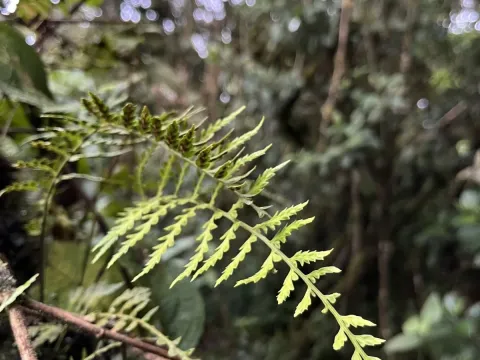
Asplenium cuspidatum
Asplenium cuspidatum
Asplenium cuspidatum is a species of fern belonging to the Aspleniaceae family. It is widely recognized for its elegant fronds and native origin in the tropical and subtropical regions of the Americas, where it often grows as an epiphyte.
What the section contains
Asplenium cuspidatum
The cultural requirements for this fern are quite strict, focusing on environmental stability. It thrives in ambient temperatures between 18 and 24 degrees Celsius, requiring a consistent climate without cold drafts, which can be detrimental to the plant.
High humidity is essential for the health of Asplenium cuspidatum. Maintaining a humidity level of 60% to 80% is crucial for the development of its delicate foliage, making it well-suited for greenhouses with controlled misting systems.
The choice of substrate is a critical part of the plant's agrotechnology. A light, airy, and porous growing medium is necessary to ensure proper gas exchange at the roots. A mixture of peat, bark, and charcoal is often recommended for optimal results.
Lighting should always be indirect or diffused. Direct exposure to intense solar radiation can cause significant damage to the plant, leading to brown, necrotic leaf tips and overall plant decline, particularly in young specimens.
Scale insects and mealybugs are the primary pests that affect this crop. These insects tend to hide in the axils of the fronds, where they extract nutrients, leading to stunted growth and a distorted appearance of the plant.
Spider mites are common in environments where the air is too dry. Infestations are typically identified by the presence of fine webbing and a stippled, yellowish appearance on the upper side of the foliage as the chlorophyll is depleted.
Root rot is the most common disease associated with improper irrigation practices. Excessive water retention in the potting mix, combined with poor drainage, creates a perfect breeding ground for fungal pathogens that decay the roots.
Management of these threats involves a combination of environmental control and the use of appropriate pesticides. Preventive measures include ensuring good air circulation around the plants to reduce the likelihood of fungal outbreaks.
For chemical control, it is essential to use products that are specifically labeled for delicate fern species, as some stronger horticultural chemicals may cause leaf scorch and further plant stress.