
Pachypodium baronii
Pachypodium baronii
Description
Growing requirements
Pachypodium baronii is a striking succulent belonging to the Apocynaceae family. Native to Madagascar, this species grows in rocky habitats, preferring well-draining, nutrient-poor substrates that mimic its natural geological environment.
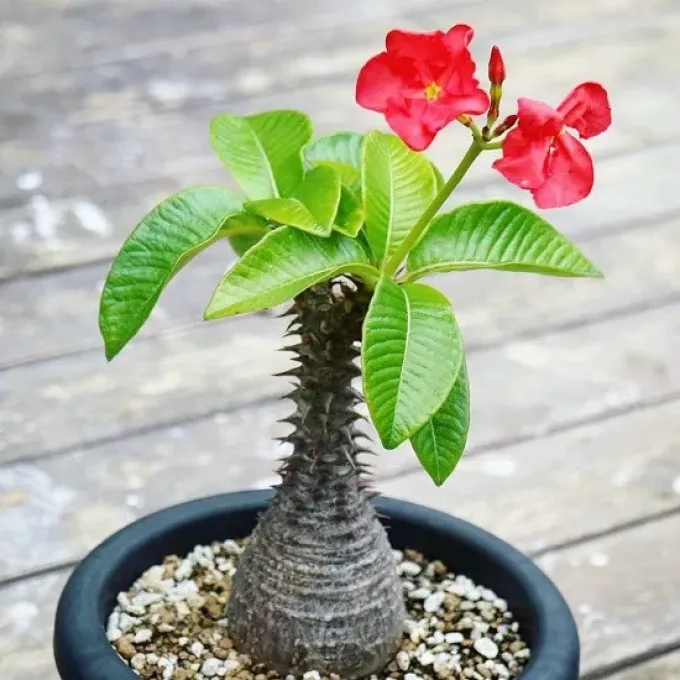
The plant is characterized by a prominent caudex, a swollen stem used for water storage during periods of drought. A key botanical feature is the arrangement of its spines, which grow in groups of three. During its growing season, the plant produces vibrant red flowers, which is a rare trait among many other Pachypodium species.
Successful cultivation requires temperatures between 20–30°C during the active growing season. The plant demands intense sunlight; insufficient light leads to etiolation, where the stem becomes weak, deformed, and loses its structural integrity.
The substrate must be highly porous to ensure rapid drainage, as the root system is extremely susceptible to rot. A suitable mixture consists of mineral-based components, such as pumice, coarse sand, perlite, and small gravel, with minimal organic content.
This species is primarily utilized in ornamental horticulture and botanical collections. When grown in controlled environments, it is essential to observe a distinct winter dormancy period by drastically reducing or withholding water to prevent root decay.
Main diseases and pests
The primary threats to this culture are root and stem rots caused by overwatering or poor drainage. Excess moisture, particularly during the cooler dormant months, is often fatal to the plant.
Common pests affecting the plant include spider mites and mealybugs. These pests thrive in low humidity and stagnant air conditions, necessitating regular monitoring and proper ventilation for effective control.