
Echidnopsis ballyi
Echidnopsis ballyi
Description
Growing requirements
Echidnopsis ballyi is a succulent species belonging to the family Apocynaceae, subfamily Asclepiadoideae. Native to the arid regions of Somalia, this plant is naturally adapted to rocky landscapes with extremely limited rainfall.
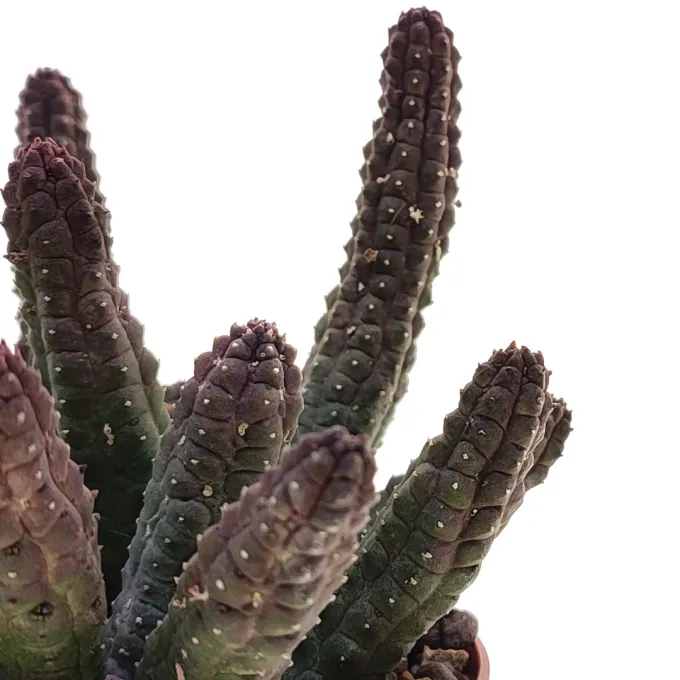
The plant features distinct, succulent, finger-like stems characterized by prominent tubercles. These structures are evolutionary adaptations that allow the plant to store significant amounts of water during the brief rainy seasons in its habitat.
Cultivation requirements necessitate high light intensity to maintain the plant's structural integrity and compact growth form. However, growers should prevent sunburn by providing protection from extreme midday heat during the peak summer months.
The substrate must be highly porous and inorganic. A mixture containing 50% grit or pumice and 50% professional succulent soil mix ensures the necessary drainage to prevent the root suffocation that often leads to plant loss.
Temperature management is critical for the species; while it thrives in warm conditions, it requires a distinct period of rest during winter when temperatures are lowered to encourage the natural physiological cycle of the plant.
Main diseases and pests
The primary threats to Echidnopsis ballyi involve pathogens associated with excessive moisture, specifically fungal root rot and stem rot caused by poor soil drainage and lack of airflow.
If the potting medium stays wet for too long, the soft tissues of the succulent can deteriorate within a few days, making early detection of moisture-related stress vital for plant survival.
Insect pests, primarily mealybugs, represent a common challenge. These pests congregate in the crevices of the tubercles, making them difficult to detect until the plant shows visible signs of infestation.
Spider mites are another potential threat, often appearing in conditions of very low humidity, which may lead to discoloration and scarring of the succulent's epidermis.
Integrated pest management strategies, including the use of systemic insecticides and proper cultural practices like maintaining adequate space between specimens, are essential for successful long-term cultivation.