
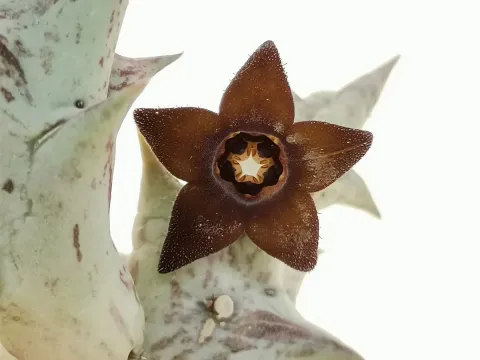
Caralluma
Caralluma
Caralluma is a genus of succulent plants within the Apocynaceae family. These plants are characterized by their leafless, fleshy, and often square-shaped stems that function as the primary storage organs for water and nutrients in arid environments.
What the section contains


Caralluma
Originating from the arid regions of Africa, India, and the Arabian Peninsula, these plants have evolved to survive in high-temperature environments with irregular rainfall. They are typically found in rocky or sandy terrain with excellent natural drainage.
Successful cultivation requires soil that mimics native conditions. A mix of sand, perlite, and a small amount of organic loam is ideal. The soil must be porous enough to allow water to pass through quickly, as root rot is the primary cause of failure in cultivation.
Climate requirements include high solar intensity and warm temperatures, generally ranging from 20°C to 35°C during the growing season. Adequate ventilation is crucial to prevent the buildup of humidity, which can lead to fungal infections even in warm environments.
Industrially, Caralluma is primarily valued for its phytochemical composition. Certain species are harvested and processed into standardized extracts used as dietary supplements, particularly those marketed for appetite suppression and metabolic support.
Fungal pathogens associated with overwatering represent the most severe threat to Caralluma production. Root rot and stem rot spread rapidly, often becoming irreversible once the internal tissues of the stem become soft and discolored.
Mealybugs are the most persistent insect pests, clustering in the crevices of the stems. Their feeding weakens the plant and creates wounds that act as entry points for secondary bacterial and fungal infections.
Spider mites are another major threat, especially in hot and dry greenhouse environments. They cause stippling and disfigurement of the stem surface, significantly reducing the vigor and commercial value of the crop.
Cultural control measures include strict adherence to drying cycles between waterings and ensuring sufficient spacing between plants to maximize airflow. Monitoring for signs of pests should be done on a weekly basis.
Chemical control is effective when applied early. Systemic insecticides are generally preferred for mealybugs, while specialized acaricides are necessary for spider mite outbreaks. Always test treatments on a small group of plants before large-scale application.