
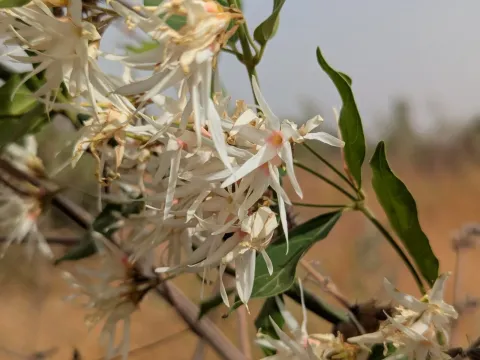
Baissea
Baissea
The genus Baissea belongs to the Apocynaceae family and consists mainly of evergreen woody vines. These plants are native to the tropical forests of Africa, thriving in hot and humid conditions.
What the section contains


Baissea
Successful growth requires organic-rich, well-draining soils that maintain consistent moisture levels without becoming waterlogged, which could lead to root decay.
In their natural habitat, these vines grow beneath the forest canopy, which makes them adapted to shaded conditions during their early developmental stages.
The plants are extremely sensitive to cold temperatures and cannot survive frost, limiting their potential for agricultural development to tropical equatorial regions.
Botanically, Baissea is characterized by opposite leaves and the presence of a milky latex sap, which is a common trait among many members of the dogbane family.
The primary threats to this culture in tropical environments include various fungal infections that proliferate rapidly in high-humidity climates.
Leaves and young stems are frequently affected by pathogens that cause spotting and necrosis, particularly when air circulation around the plants is poor.
Among pests, sap-sucking insects such as aphids and scale insects are the most common, as they drain the plant of nutrients and cause significant stress.
Root-knot nematodes also present a serious challenge by damaging the root system, which can severely stunt the growth and overall health of the vine.
Effective management includes strict sanitation practices, such as removing infected parts and ensuring proper plant spacing to prevent the spread of diseases.