
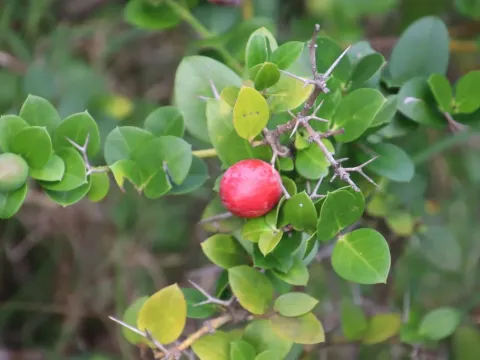
Carissa
Carissa L.
Carissa (Carissa L.) belongs to the Apocynaceae family. This evergreen shrub is native to tropical and subtropical regions of Africa, Asia, and Australia, where it is valued for its versatility and resilience.
What the section contains

Carissa
The plant thrives in sunny locations with well-drained, fertile soil. It has a high tolerance for various soil types but cannot withstand waterlogging. Providing excellent drainage is essential to prevent root rot, which is the most common issue for this crop.
As a tropical plant, Carissa is highly sensitive to cold and frost. In temperate zones, it is typically grown in greenhouses or as a container plant that can be moved indoors during colder months to maintain the optimal temperature range of +20°C to +30°C.
Botanically, it is a dense, spiny shrub with leathery, dark green leaves. The plant features attractive, fragrant, white or pinkish star-shaped flowers that bloom periodically, contributing to its aesthetic appeal.
Agricultural management requires regular pruning to maintain a manageable size and to promote branching. Increased branching leads to higher flower density, which is crucial for maximizing the fruit harvest throughout the growing season.
The fruit of the Carissa is a fleshy, edible berry that turns deep red or purple upon ripening. It has a sweet-tart flavor, often described as a mix between a strawberry and a cranberry, making it highly desirable for culinary use.
Carissa berries are widely used in the production of jams, jellies, and sauces. Because of their high pectin content, they process easily into preserves, and their vitamin C content makes them a healthy addition to any diet.
Fruit production is influenced by light intensity and proper fertilization. Under optimal conditions, a mature bush can be quite productive, providing a steady supply of berries over a long period if the plant is well-fed with potassium-rich fertilizers.
Commercial plantations focus on irrigation management to ensure consistent yield. By maintaining stable soil moisture and providing sufficient nutrients, growers can significantly increase the size and sugar content of the harvested fruit.
Young plants typically begin bearing fruit within three to four years. With regular maintenance and rejuvenation of the canopy, the bushes remain productive for many years, providing a reliable annual source of produce.
The primary threat to Carissa is excessive soil moisture, which leads to root and crown rot. Growers must ensure that the planting site or pot has adequate drainage to prevent saturation after rain or irrigation.
Common pests include scale insects, aphids, and spider mites. These pests thrive in dry air conditions, which are often found in greenhouse settings if humidity levels are not properly regulated.
Integrated pest management, including regular inspections and the use of insecticidal soaps or horticultural oils, is effective in keeping pest populations under control without damaging the fruit quality.
It is important for workers to be aware that the plant contains a white latex sap, which can be an irritant to skin. Gloves and protective clothing should be worn during all pruning and harvesting activities.
Maintaining good airflow within the canopy through proper spacing and pruning significantly reduces the risk of fungal infections and makes it harder for pests to establish colonies on the leaves.
Harvesting is performed by hand when the berries reach full maturity. The fruit must be soft and deeply colored; picking them while unripe is discouraged, as they may contain higher levels of latex that affect the taste.
Because fruit ripening occurs over an extended period, harvesting is usually a multi-pass operation. This ensures that only the highest quality berries are collected at the peak of their sweetness and aroma.
Due to the presence of sharp, V-shaped thorns, harvesters must exercise caution. Using appropriate protective gear, such as heavy-duty gloves, is essential to protect against scratches while reaching into the dense shrub canopy.
Once harvested, the berries should be kept in a cool, well-ventilated area. Rapid cooling helps maintain firmness and prevents premature fermentation, which can occur if the berries are left in warm, confined spaces.
Carissa berries are relatively durable, allowing for efficient transport to local markets. Proper packaging that ensures ventilation while protecting the berries from crushing will help maintain their shelf life and quality.