
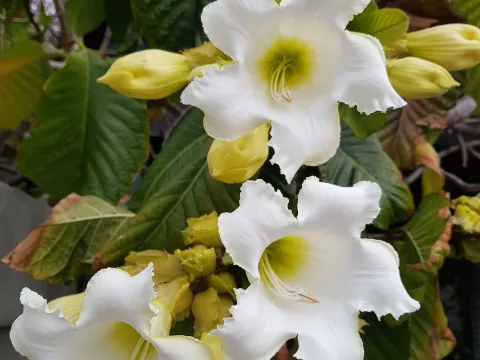
Beaumontia
Beaumontia
Beaumontia is a genus of evergreen woody climbers belonging to the Apocynaceae family. Native to tropical regions of Asia, these plants are known for their spectacular, fragrant, trumpet-shaped white flowers.
What the section contains


Beaumontia
The plant requires a strictly tropical environment to thrive. It demands high ambient temperatures, ideally between 20 and 28 degrees Celsius, and cannot survive exposure to frost or prolonged cold snaps.
Soil requirements involve a rich, well-draining potting medium. A mixture of peat, loam, and coarse perlite or sand works best to ensure that the root system remains aerated while retaining necessary moisture.
Light levels are crucial for the development of Beaumontia. While it needs plenty of bright, filtered light to produce its iconic blooms, intense direct sun should be avoided to prevent scorched foliage.
High humidity is essential for the healthy growth of this vine. If kept in a greenhouse or sunroom, the plant benefits from regular misting or the use of automated humidification systems to mimic its native jungle habitat.
Spider mites are the most common pests that affect Beaumontia, particularly in warm, dry indoor environments. They pierce the leaf tissues, leading to yellowing and premature leaf drop if left unchecked.
Mealybugs can often be found in the leaf axils and along the stems. Due to their waxy coating, they can be difficult to remove, often requiring specialized horticultural oils or insecticidal soaps.
Root rot, caused by various species of fungi, is a frequent issue when the soil remains too wet for too long. Improving drainage and ensuring the top inch of soil is dry before watering is the best preventative measure.
Scale insects may also attach themselves to the woody stems of the vine. These pests can be manually removed with a cotton swab dipped in alcohol, followed by a thorough inspection of the plant's health.
Lack of proper air circulation is a common threat in confined spaces, leading to the rapid spread of fungal leaf spot diseases. Keeping the plant in an area with good airflow helps maintain its foliage in good condition.