
Caralluma edulis
Caralluma edulis
Description
Sowing dates
Caralluma edulis is a perennial succulent belonging to the Apocynaceae family. It is recognized for its thick, succulent stems and its history of traditional use in arid regions as a survival food.
Sowing should take place in a well-draining, sandy substrate during the warmer months. Seeds require warmth, typically between 25 and 30 degrees Celsius, to germinate successfully.
Vegetative propagation is achieved via stem cuttings. Cuttings must be left to air-dry for several days to form a callus over the cut surface, preventing bacterial rot during rooting.
The biological development of this plant is centered on water storage. Its physiology allows it to thrive in nutrient-poor desert soils where other crops would quickly fail to survive.
Establishing the crop requires careful attention to the initial growth phase, ensuring seedlings or cuttings are protected from extreme moisture during their vulnerable early development.
Growing requirements
This species demands full sun exposure to maintain its compact growth form. Lack of sufficient light leads to etiolation, which weakens the stems and reduces their nutritional quality.
Soil requirements are strict: a highly permeable, gritty mix is essential. Any water retention in the soil profile will almost certainly lead to root mortality through fungal decay.
The plant thrives in temperatures between 25 and 40 degrees Celsius. It is highly sensitive to cold; temperatures dropping below 10 degrees can be fatal if the soil is not completely dry.
Watering must be infrequent. The soil should be allowed to dry completely between waterings. In winter, the plant enters a dormant phase where water should be almost completely withheld.
Excellent air circulation is necessary to prevent the development of pests and diseases, especially in protected environments like greenhouses where humidity can spike unexpectedly.
Yield
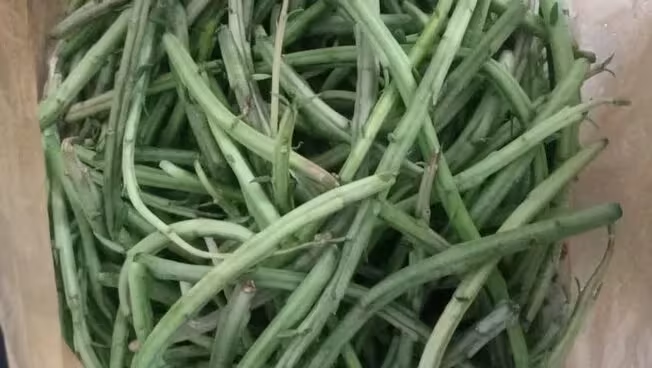
The yield of Caralluma edulis consists of its succulent stems, which are harvested for local consumption. The biomass production is naturally slow due to the plant's adaptation to arid ecosystems.
Yield stability depends on maintaining an environment that mimics the desert climate while providing just enough nutrients to support healthy succulent tissue growth.
Regular monitoring of stem turgor allows producers to estimate the optimal harvest time. Healthy, turgid stems indicate a plant with high water and nutrient retention.
While not a high-volume crop in conventional farming, its niche market potential as a functional food and herbal medicine makes it a valuable plant in specific regions.
Total yield can be improved by spacing plants appropriately to allow for maximum solar radiation exposure, which directly impacts the concentration of beneficial compounds.
Main diseases and pests
Fungal rot caused by overwatering remains the primary threat to this crop. Once rot begins in the root system, it spreads rapidly to the stems, making recovery difficult.
Common pests include mealybugs, which are notoriously difficult to control due to their ability to hide in the joints of the succulent stems, and spider mites in dry conditions.
Bacterial soft rot can occur if the stems are bruised or damaged during handling. This is particularly problematic in humid, stagnant air conditions within a growing facility.
Preventive measures include the use of sterilized tools for every cut, as well as strict quarantine protocols for any new plants introduced to the production site.
Regular inspection and the targeted use of organic-approved pesticides can manage pest outbreaks before they compromise the structural integrity of the plant community.
Harvesting
Harvesting is performed by carefully pruning individual mature stems. It is crucial to use clean, sharp blades to ensure a quick healing of the cut surface on the mother plant.
The optimal harvest timing is during the peak of the growing season when the plant has effectively synthesized and stored the necessary vitamins and minerals in its tissue.
Once harvested, the stems should be kept in a cool, dry, and well-ventilated location. Freshness is maintained by preventing moisture buildup on the surface of the cut material.
Processing for market may involve air-drying or light heat treatment, which can help remove any natural bitterness found in wild-harvested specimens of the plant.
Proper packing, using breathable materials such as mesh or paper, is vital for maintaining post-harvest quality and preventing the onset of fungal decay during distribution.