
Pigface
Carpobrotus glaucescens (Haw.) Schwantes
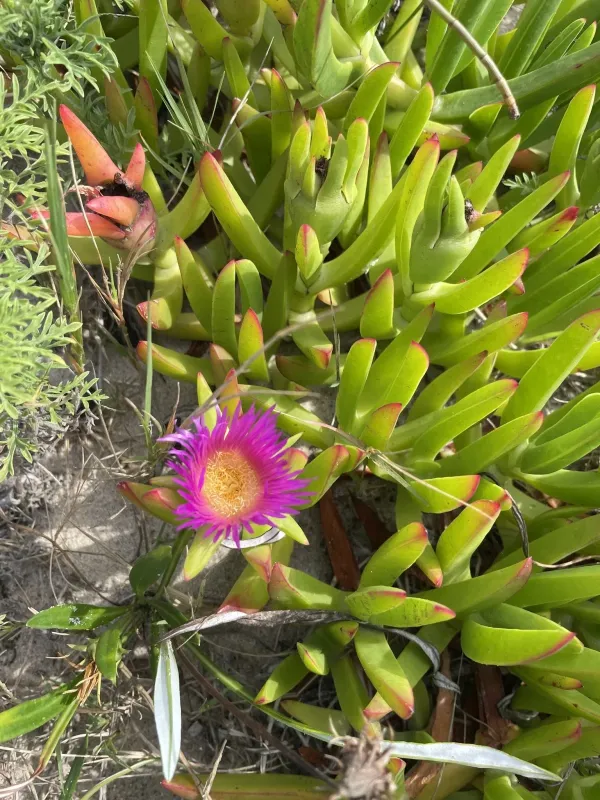
Description
Growing requirements
Pigface, scientifically known as Carpobrotus glaucescens, is a succulent perennial plant belonging to the Aizoaceae family. It is native to the coastal regions of eastern Australia, where it naturally inhabits sandy dunes and rocky cliffs.
The plant features thick, fleshy, three-sided leaves that serve as water storage organs, allowing it to withstand prolonged droughts. Its creeping stems grow horizontally and root at the nodes, creating a dense mat that blankets the ground.
For successful cultivation, the crop requires full sun exposure and sandy, well-draining soil. It is highly tolerant of saline environments, making it an excellent choice for coastal landscape restoration and wind-exposed areas.
Climatic requirements are focused on mild to warm conditions, as the plant is sensitive to severe frost. In agricultural settings, it is valued for its minimal water requirements once established in a suitable substrate.
Propagation is typically achieved through stem cuttings, which root readily in warm, sandy media. Proper spacing is important to manage its vigorous growth habit, as it can quickly become invasive if not monitored in favorable climates.
Main diseases and pests
The primary threat to the health of the plant is root rot caused by poor drainage or excessive soil moisture. Maintaining a dry environment around the base of the stems is critical to preventing fungal pathogens from compromising the root system.
Pests are generally minimal, but mealybugs and scale insects may occasionally infest the plants, particularly in glasshouse conditions. Regular inspection and the removal of stagnant air pockets can effectively mitigate these risks during the growth cycle.
Harvesting
The plant is cultivated for its edible fruit, which is known for its sweet and slightly salty flavor profile. Harvesting is conducted when the fruit turns from green to a deep magenta or reddish-purple color and becomes soft to the touch.
In addition to food production, it is widely used in environmental engineering to stabilize soil and prevent erosion on sandy banks. Its traditional use also extends to medicinal applications where the juice of the leaves is used to treat skin irritations.