
Aloinopsis schooneesii
Aloinopsis schooneesii
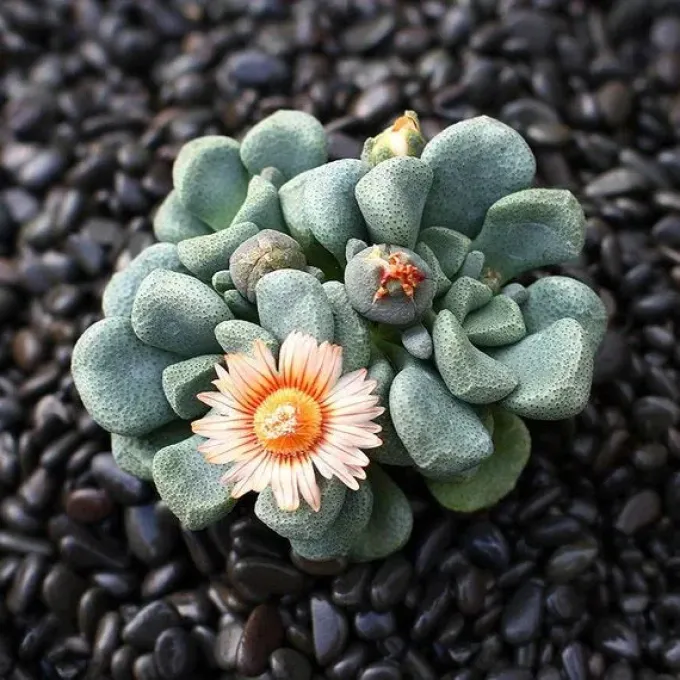
Description
Sowing dates
Propagation of Aloinopsis schooneesii is primarily achieved through seeds. Sowing should take place in early spring when light intensity begins to rise, providing the necessary energy for germination.
The substrate for sowing must be extremely well-draining and sterile to prevent fungal outbreaks. Seeds should be sown on the surface and pressed lightly without covering them with soil.
Maintaining a consistent moisture level and a temperature range between 20–25 degrees Celsius is crucial. Regular ventilation of the seed container helps prevent damping-off disease.
Seedlings are very slow-growing and require delicate handling. Once they have developed a few pairs of leaves, they can be gradually acclimated to drier, more open environments.
Patience is essential, as Aloinopsis schooneesii takes time to reach maturity. Avoid moving the young plants frequently to allow their roots to establish properly.
Growing requirements
Aloinopsis schooneesii is a member of the Aizoaceae family, native to the arid landscapes of South Africa. It is characterized by its tuberous root system and succulent, clump-forming leaf rosettes.
This species requires high light levels, ideally full sun or very bright filtered light. Inadequate lighting will result in etiolation, where the plant loses its natural, compact shape.
The growing medium must be highly inorganic, consisting of coarse sand, perlite, and small gravel. Standard potting soil is too moisture-retentive and will likely kill the plant.
Watering should be sparse and provided only during the active growing season. It is vital to ensure that the medium dries out completely between waterings to prevent root rot.
A distinct winter dormancy period is required for the plant to flower and thrive. Keep the plant cool and dry during the winter months to mimic its natural desert habitat.
Main diseases and pests
Root rot, caused by overwatering or poor drainage, is the primary threat to Aloinopsis schooneesii. Once the root system and the caudex start to rot, recovery is extremely difficult.
Mealybugs are common pests that infest the leaf crevices. These insects suck sap from the plant and can significantly weaken its structure if left untreated.
Spider mites may occur if the plant is kept in an environment with poor airflow and low humidity. These pests damage the succulent surface, leading to scarring.
Root mealybugs can also infest the underground portions of the plant. Regular inspection of the root system during repotting is an essential preventative measure.
Use insecticides specifically formulated for succulents, and always conduct a patch test before applying treatments to the entire plant to avoid phytotoxicity.