
Aloinopsis luckhoffii
Aloinopsis luckhoffii
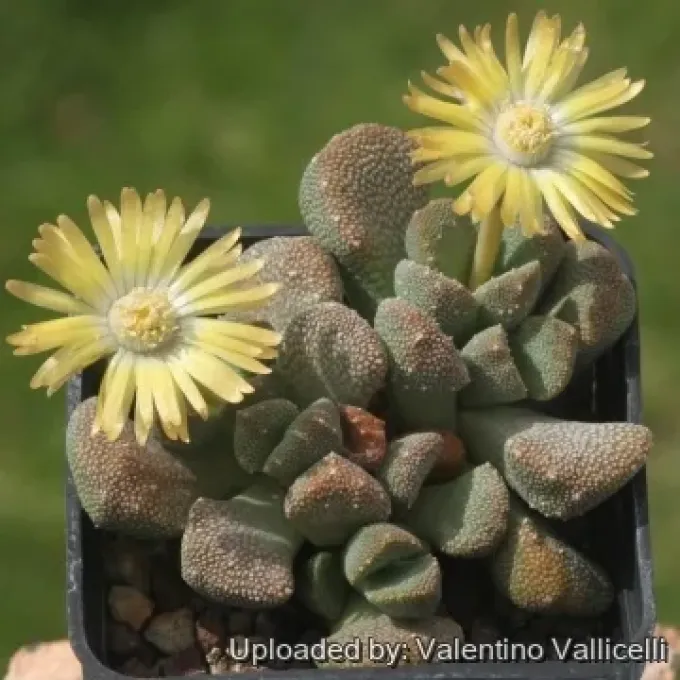
Description
Sowing dates
Sowing seeds of Aloinopsis luckhoffii is best performed in spring when daylight hours increase. Maintain a temperature range of +20...+25 degrees Celsius for optimal germination success.
Use a well-draining mineral-based substrate containing coarse sand and perlite. Keep the soil slightly moist, but avoid waterlogging, which is detrimental to delicate seedlings.
Cover containers with glass or plastic film to establish a stable greenhouse climate. Daily ventilation is mandatory to ensure fresh air circulation and prevent fungal growth.
Seedlings show a slow growth rate and require steady attention during their first months. Avoid premature transplanting until the root system is sufficiently developed.
Once established, the young plants should be gradually moved to brighter light conditions. Using appropriate mineral fertilizer in very low concentrations can support the development.
Growing requirements
Aloinopsis luckhoffii belongs to the Aizoaceae family, native to the arid landscapes of South Africa. It is a specialized succulent adapted to survive in harsh, moisture-deprived environments.
Direct bright sunlight is essential for this species to maintain its compact growth form. Without enough light, the plant will become etiolated and lose its natural resilience.
The potting medium must be strictly porous and inorganic to prevent root rot. Incorporating fine gravel into the soil mix is highly recommended to improve drainage characteristics.
During the growing season, it prefers moderate warmth. A distinct winter dormancy period is vital, requiring cool temperatures around +8...+12 degrees Celsius and very little water.
Watering should be performed only when the soil substrate is entirely dry. The bottom-watering technique is preferred to keep the rosette dry and avoid fungal development.
Main diseases and pests
Root rot is the most critical threat to Aloinopsis luckhoffii, usually caused by poor drainage or overwatering. Once rot begins, it is often difficult to save the plant.
Mealybugs are common pests that infest the crevices of the succulent leaves. Careful inspection of the leaf base is necessary for early detection of these white, cotton-like pests.
Spider mites can become an issue if the ambient air is too dry for prolonged periods. These pests cause stunted growth and fine speckling on the surface of the leaves.
Poor ventilation and high humidity significantly increase the risk of fungal infections. Ensuring good air circulation is a key preventive measure in indoor succulent collections.
Systemic insecticides or specialized miticides should be applied if an infestation occurs. Always follow manufacturer instructions to avoid damaging the succulent tissue.