
Aloinopsis rubrolineata
Aloinopsis rubrolineata
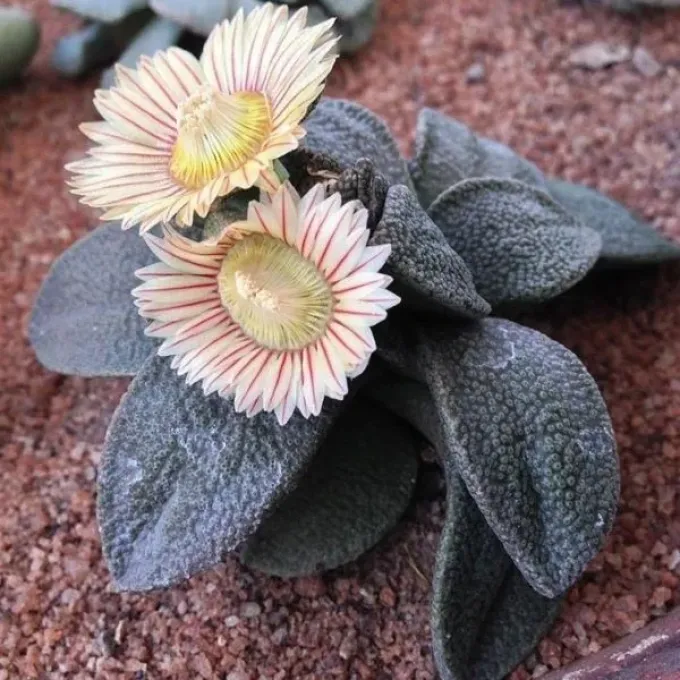
Description
Sowing dates
Aloinopsis rubrolineata is a member of the Aizoaceae family, native to the arid landscapes of South Africa. Propagation is commonly achieved via seeds, which should be sown in the spring to capitalize on increasing light duration.
The ideal substrate for sowing is a porous, mineral-based mix consisting of sand and fine grit. Seeds are surface-sown and kept in a high-humidity environment until germination is successfully established.
Temperature control is crucial; the germination phase requires consistent temperatures around 20–25 degrees Celsius. Sudden drops in temperature or excessive humidity after germination can inhibit development.
Seedlings require careful transition to dryer air conditions once they develop their first true leaves. Gradual exposure to sunlight helps in strengthening the plant tissues and preventing etiolation.
Vegetative propagation, involving the careful separation of offsets, is also practiced by growers. This method is highly preferred for maintaining the specific genetic traits and coloration of the parent specimen.
Growing requirements
This succulent is specifically adapted to environments with irregular rainfall. It features a tuberous root system, which acts as a vital water reservoir, allowing the plant to survive prolonged dry spells.
Soil requirements are strict: the medium must have excellent drainage. A mix of pumice, coarse sand, and a small portion of loam is recommended to ensure that moisture does not linger around the root zone for too long.
Sunlight is the most critical environmental factor. Aloinopsis rubrolineata thrives in direct, bright sunlight, which promotes the development of its signature red-lined leaf pattern and compact growth habit.
Watering intervals should follow the cycle of the growing season. During the active growth period, water thoroughly but infrequently, allowing the substrate to dry out completely before the next irrigation event.
The dormancy period during winter requires almost total dryness and cool temperatures, ideally between 8 and 12 degrees Celsius, which is essential to trigger future flowering and maintain the plant's health.
Main diseases and pests
The most significant threat to Aloinopsis rubrolineata is rot caused by stagnant water. Once fungal pathogens invade the fleshy leaves and roots, recovery is often difficult, necessitating the prompt removal of affected parts.
Mealybugs are the most common insect pests. They tend to cluster in the hidden crevices of the plant's leaf rosettes, where they feed on the sap and produce a characteristic white, waxy secretion.
Spider mites can also be problematic, especially in environments with low humidity and poor air circulation. They cause stippling and disfigurement of the leaf surfaces, significantly reducing the plant's aesthetic value.
Regular monitoring is the best strategy for pest management. If an infestation is detected, physical removal followed by the application of targeted insecticides or natural remedies like neem oil is highly effective.
Preventative measures, such as maintaining adequate spacing between plants and ensuring efficient ventilation, significantly reduce the incidence of fungal and pest-related issues in a collection.