
Aloinopsis malherbei
Aloinopsis malherbei
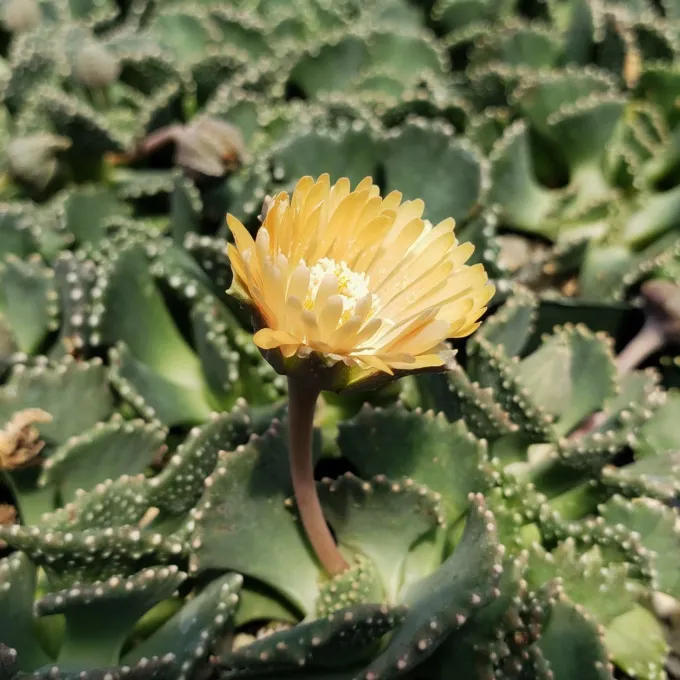
Description
Sowing dates
The propagation of Aloinopsis malherbei by seeds requires a temperature range of 20–25°C. Spring is the most suitable season for starting the crop.
Seeds should be sown in a well-draining, sandy substrate. It is crucial to maintain high humidity with a clear cover until germination is complete.
Once seedlings emerge, they should be gradually acclimated to lower humidity levels to prevent fungal growth and stem decay.
Young plants are particularly vulnerable to overwatering, so water must be applied sparingly using a misting method rather than heavy watering.
Growing this species from seed is a slow process, reflecting its natural adaptation to the arid climates of its native South Africa.
Growing requirements
Aloinopsis malherbei is a member of the Aizoaceae family, famous for its unique textured foliage that acts as a water storage organ.
The substrate must be highly mineral-based, consisting of crushed gravel, pumice, and coarse sand to ensure perfect drainage and aeration of the roots.
Full sun is essential for this plant. In indoor conditions, it should be placed in the brightest possible spot to maintain its compact and robust form.
A distinct winter dormancy period is required. During this time, the plant should be kept cool and dry to mimic its natural environmental cycle.
The plant demonstrates high drought tolerance, but excessive air humidity can lead to physiological stress and rot, making climate control vital.
Main diseases and pests
Root rot is the most significant threat to the health of the plant, almost always caused by improper watering practices or inadequate substrate drainage.
Mealybugs are the primary pests encountered; they tend to hide in the tight clusters of the plant's rosettes, making them difficult to detect.
Spider mites may infest the plant during periods of high heat and poor ventilation, causing discoloration and scarring on the fleshy leaves.
Fungal infections can develop if the plant is kept in humid conditions without adequate fresh air, leading to rapid tissue collapse.
Proper hygiene, including checking the plant for pests and using clean mineral soil, is the best prevention against these common threats.