
Aloinopsis rosulata
Aloinopsis rosulata
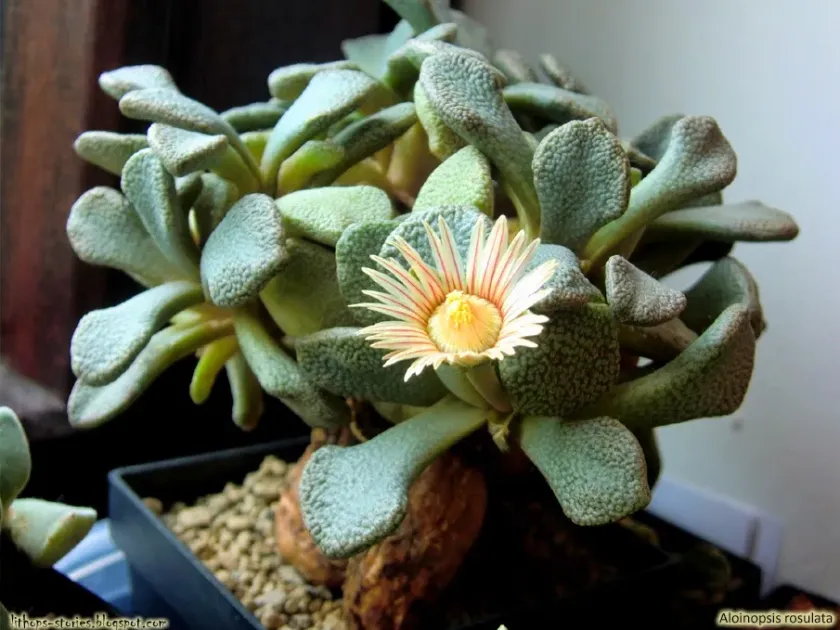
Description
Sowing dates
Sowing seeds of Aloinopsis rosulata is best performed in late winter or early spring to ensure the young seedlings receive adequate natural light.
Seeds should be sown in shallow trays containing a well-draining substrate mix of sand and loam, kept at temperatures between 20–22 degrees Celsius.
It is crucial to maintain moderate soil moisture during the first few weeks after sowing by covering the container with glass or film to create a greenhouse effect.
Once the first true leaves emerge, the seedlings should be gradually acclimated to fresh air by increasing the ventilation time daily.
Transplanting the young plants into individual pots should be deferred until the root system has matured, typically occurring after 6–8 months of growth.
Growing requirements
Aloinopsis rosulata belongs to the Aizoaceae family and is a miniature succulent native to the arid landscapes of Southern Africa.
The plant exhibits a distinctive appearance, with fleshy, compact leaves arranged in rosettes often covered with tiny tubercles or wart-like growths.
To thrive, the culture requires intense sunlight exposure, making south-facing windows or specialized glasshouses the most suitable environments.
The growing medium must be highly porous and mineral-based, requiring the inclusion of coarse sand, grit, or perlite to prevent harmful moisture retention.
During the active growing season, watering must be careful, allowing the soil to dry out completely, while the winter period necessitates a near-dry rest.
Main diseases and pests
The primary threat to Aloinopsis rosulata is excessive substrate moisture, which quickly induces root and stem rot, often resulting in total plant loss.
Common pests include the mealybug and root mealybug, which tend to hide in leaf axils or within the top layer of the substrate.
In environments with poor air circulation, the plant becomes susceptible to spider mites, particularly during the hot and dry summer months.
To prevent infestations, it is recommended to inspect the undersides of the leaves regularly and apply systemic insecticides if any signs of damage appear.
Ensuring constant airflow around the plant rosettes is also vital to prevent stagnant humidity and the development of fungal infections on the leaf surface.