
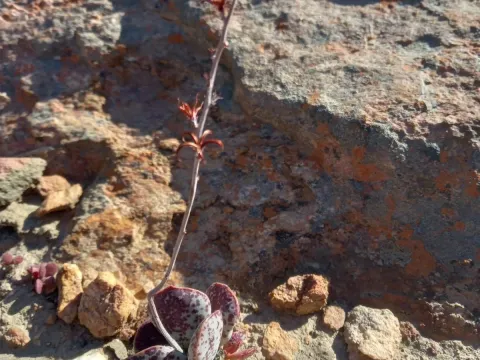
Adromischus maculatus
Adromischus maculatus
Adromischus maculatus is a distinct succulent species belonging to the Crassulaceae family. Native to the arid landscapes of South Africa, it has evolved to survive in nutrient-poor, rocky substrates, making it a highly specialized plant adapted to extreme drought conditions.
What the section contains
Adromischus maculatus
The plant features thick, fleshy leaves that often display striking patterns of dark spots or blotches. These succulent leaves are designed to store water, allowing the plant to thrive even when water availability is extremely limited for extended periods of time.
Successful cultivation requires a gritty, highly porous potting mix. A standard mix for cacti and succulents, amended with extra perlite or pumice, is recommended to ensure that water drains rapidly and that the roots have constant access to air.
Light is perhaps the most critical factor for Adromischus maculatus health. It requires bright, indirect sunlight to maintain its structural integrity and vibrant leaf coloration. Insufficient light will quickly cause the plant to etiolate and lose its attractive, dense form.
Temperature management should follow seasonal cycles, reflecting its natural habitat. During the summer, it enjoys warm conditions, while in winter, it enters a period of dormancy. During this phase, it is vital to reduce watering drastically to prevent any physiological stress.
The most common threat to this culture is fungal infection, which is almost invariably caused by overwatering or poor drainage. Excess moisture in the soil leads to root rot, a condition that is often fatal if not diagnosed and corrected early.
Pests such as mealybugs and spider mites are frequent visitors in domestic environments. These organisms hide in the tight spaces between leaves and at the base of the stem, often going unnoticed until the infestation becomes significant.
Regular inspection of the plant is necessary for early detection. If pests are found, systemic insecticides specifically formulated for succulents should be applied, ensuring that the entire surface of the plant is covered to disrupt the life cycle of the invaders.
Poor ventilation can exacerbate the risk of both fungal diseases and insect outbreaks. Ensuring that the plant is placed in a spot with good airflow helps keep the leaf surface dry and discourages the establishment of pest colonies.
Maintaining a strict dry period during winter is the best defense against rot. By allowing the soil to dry out completely, the grower simulates the plant's natural environment, thereby increasing its natural resistance to diseases and promoting healthy growth in spring.