
Adromischus cooperi
Adromischus cooperi
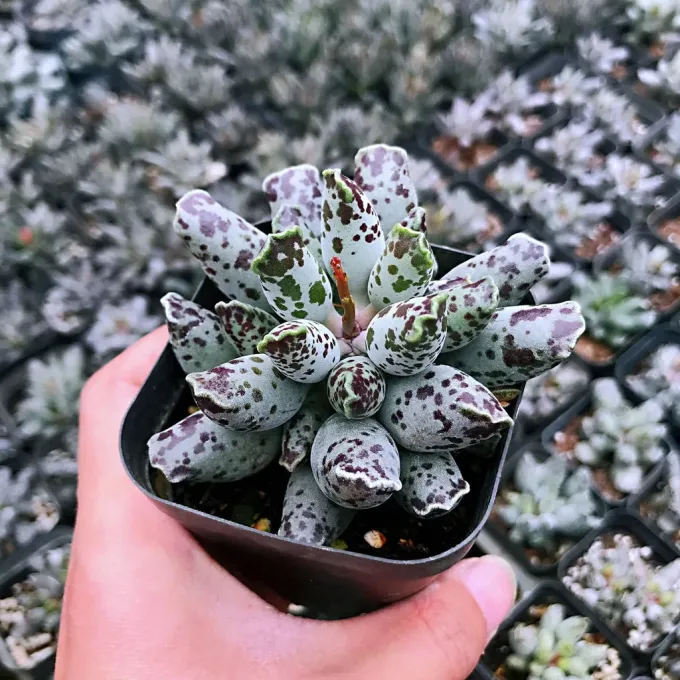
Description
Growing requirements
Adromischus cooperi is a perennial succulent plant belonging to the Crassulaceae family. Native to the arid landscapes of South Africa, it has evolved specific physiological traits to endure harsh, dry climates with limited water availability.
The plant features small, clustered, fleshy leaves that are typically spotted or mottled with purple or green colors. Its growth habit is compact, making it a popular choice for indoor cultivation in specialized succulent gardens.
Lighting requirements are significant; this species thrives in bright, filtered light. While it prefers sunny spots, direct afternoon sun in midsummer can scorch the delicate leaves, necessitating some protection during peak heat hours.
Soil composition must prioritize drainage above all else. A standard cactus or succulent mix, heavily amended with coarse sand, pumice, or perlite, provides the necessary pore space to prevent root suffocation and water retention.
Temperature management is crucial for the dormancy cycle. While it grows well in typical room temperatures during the summer, it requires a cooler period during winter, ideally between 10-15 degrees Celsius, to maintain its health and stimulate flowering.
Main diseases and pests
The most significant threat to Adromischus cooperi is root rot, induced by waterlogged soil. When the substrate remains wet for extended periods, the root system loses its ability to function, leading to rapid decay of the entire plant.
Mealybugs constitute a common pest issue for this species. These small, cottony insects hide in the tight spaces between leaves and at the base of the stem, feeding on plant sap and significantly weakening the host's vitality.
Scale insects can also infest the leaves, attaching themselves firmly and creating small, brown bumps that are often mistaken for part of the plant's texture. Removing them manually with an alcohol-soaked swab is often the safest control method.
Fungal pathogens may invade if the plant is kept in an environment with poor air circulation. Symptoms often appear as soft, translucent spots on the leaves, which eventually turn mushy or brown, indicating advanced stage of infection.
Integrated pest management involves regular inspections and maintaining proper spacing between plants to allow for airflow. In case of severe infestation, using systemic insecticides labeled for succulent use is recommended to ensure complete elimination of pests.