
Adromischus triflorus
Adromischus triflorus
Description
Growing requirements
Adromischus triflorus is a perennial succulent belonging to the Crassulaceae family. Native to the rocky terrains of South Africa, this plant has evolved to thrive in nutrient-poor, well-draining soils under intense light conditions.
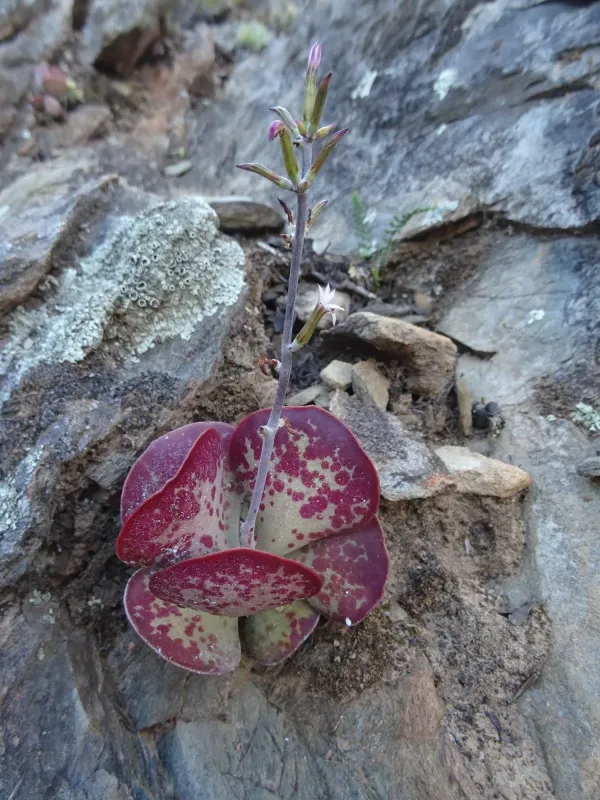
The plant is characterized by its fleshy, rounded leaves that often feature mottled patterns of red or purple. These leaves are the primary water-storage organs, allowing the plant to survive extended drought periods in its natural arid habitat.
Cultivation requires a substrate that mimics its natural stony environment. A professional mix should consist of coarse sand, perlite, and a small portion of potting soil. Good aeration is vital to ensure that the roots do not remain damp for long periods.
Light intensity is crucial for maintaining the plant's compact form and natural coloration. While it tolerates bright light, extreme midday heat in greenhouses may require light shading to prevent the scorching of the leaf tissues.
Temperature management follows a seasonal cycle. During the growing season, moderate temperatures between 20°C and 25°C are ideal. During the dormant winter phase, keeping the plant slightly cooler, around 10°C to 12°C, helps to mimic natural rhythms and prevents weak growth.
Main diseases and pests
The most significant threat to Adromischus triflorus is root rot, caused by overwatering or poor drainage. Excess moisture in the soil leads to an environment where anaerobic bacteria and fungi thrive, quickly destroying the root system.
Mealybugs are the most common pest observed in commercial and domestic collections. These insects cluster in the leaf axils, sucking the plant's sap and weakening its structure. Regular checks and immediate application of systemic insecticides are necessary to maintain health.
Poor ventilation during the colder months can lead to fungal leaf spot. These spots usually appear as dark, sunken areas on the leaves. Once noticed, the environment must be adjusted to increase airflow and reduce ambient humidity immediately.
Spider mites can also become an issue in overly dry conditions with very low humidity levels. These mites damage the epidermis of the leaves, resulting in pale, scarred tissue that ruins the plant's aesthetic value and physiological health.
Prevention remains the most effective strategy. This includes using sterilized soil, maintaining a strict watering schedule, and ensuring that all newly acquired plants are quarantined before being introduced to an established collection to prevent the spread of pests.