
Adromischus hemisphaericus
Adromischus hemisphaericus
Description
Growing requirements
Adromischus hemisphaericus is a succulent perennial plant belonging to the Crassulaceae family. It is native to the arid rocky regions of South Africa, where it has evolved to thrive in nutrient-poor, well-draining soils under intense sun exposure.
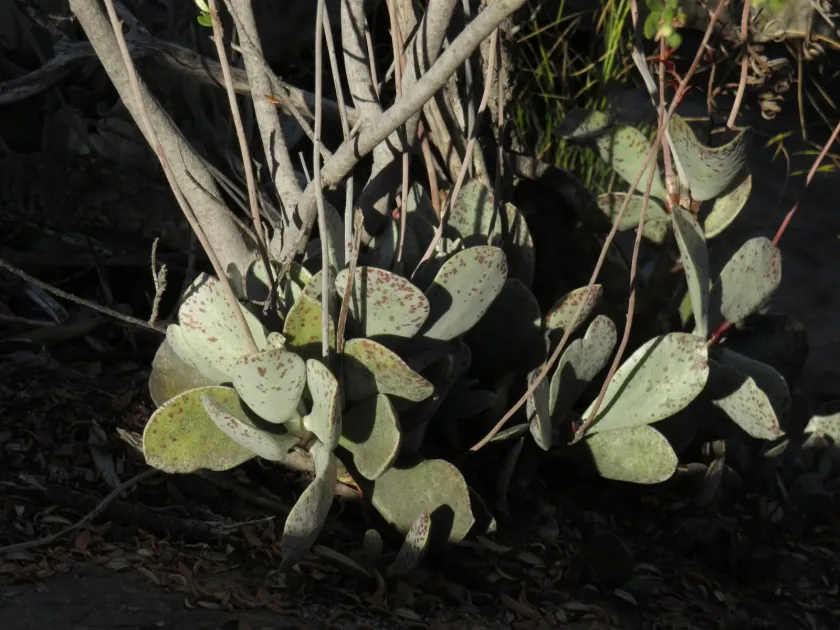
Botanically, it is characterized by its clustered, fleshy leaves that often exhibit a unique, almost hemispherical shape with mottled patterns. These leaves are specialized structures designed to store water, allowing the plant to withstand extended periods of drought.
For cultivation, the species requires bright, indirect sunlight to maintain its compact growth habit. Exposure to direct intense sun should be monitored, as it may cause leaf scorching during the peak heat of summer, while insufficient light leads to etiolation.
The choice of soil is critical for this species; a gritty, fast-draining mineral mix is required to simulate its natural habitat. Typically, a combination of coarse sand, perlite, and a small amount of potting soil is used to ensure maximum aeration.
Temperature management is straightforward: the plant prefers warm days and cooler nights. During the winter, it is essential to keep the plant in a cooler environment, ideally between 10 and 12 degrees Celsius, to trigger a healthy dormancy period.
Main diseases and pests
The primary threat to the health of Adromischus hemisphaericus is root rot, which is almost exclusively caused by overwatering or poor drainage. Excessive soil moisture prevents root respiration and promotes the rapid growth of pathogenic fungi.
Pest infestations, particularly mealybugs, can be a concern in enclosed spaces. These insects hide in the nooks between the leaves and feed on the plant sap, leading to weakened growth and susceptibility to secondary infections if left untreated.