
Adromischus sphenophyllus
Adromischus sphenophyllus
Description
Growing requirements
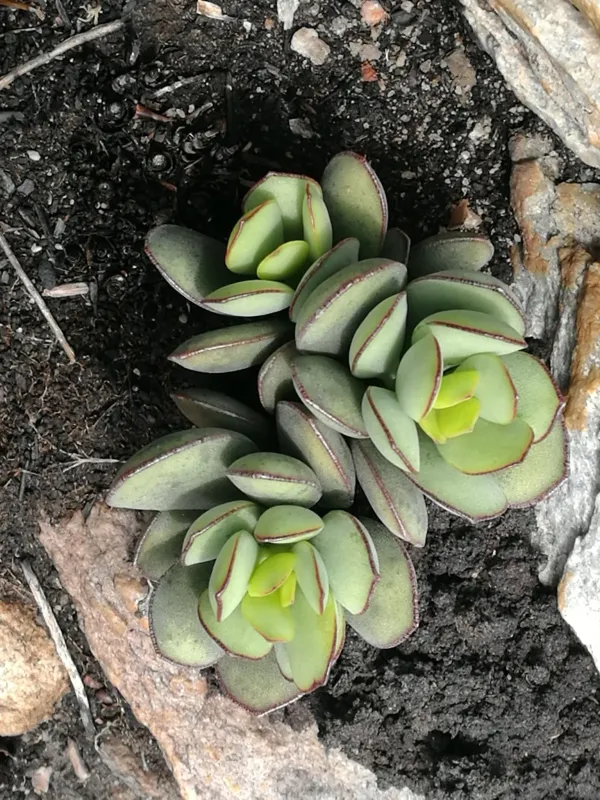
Adromischus sphenophyllus is a captivating succulent species within the Crassulaceae family. It is widely recognized for its wedge-shaped leaves that often display a fascinating mottled pattern, making it a popular subject for collectors of dwarf succulents.
Native to the arid regions of South Africa, this plant has evolved to thrive in rocky environments with minimal soil depth. Its succulent nature allows it to store water efficiently, enabling it to endure long periods of drought in its natural habitat.
In terms of light, this plant requires high exposure to survive. Placing the plant in a bright, sun-lit area is essential to maintain its compact growth form and to encourage the development of its distinct leaf markings, which fade under low light.
The choice of soil is vital for the health of the plant. A gritty, highly porous mix consisting of pumice, perlite, and coarse sand is recommended to ensure rapid drainage, as this species is highly susceptible to root decay if left in moist conditions.
Watering practices should follow the dry-and-wet cycle method. In the active growing season, water deeply but allow the substrate to dry out completely before the next irrigation. During the dormant winter period, keep the soil nearly dry to prevent freezing damage.
Main diseases and pests
Root rot remains the most significant threat to Adromischus sphenophyllus. This condition is usually the result of overwatering, particularly when the ambient temperature is low, which prevents the soil from drying out within a reasonable timeframe.
Mealybugs are a common pest that frequently targets this species. They tend to settle in the tight spaces between the succulent leaves, making them difficult to detect until a significant infestation has already established itself.
Scale insects can also infest the leaves, feeding on the internal fluids of the plant. If left untreated, they can cause yellowing and eventual loss of leaves, leading to the overall weakening of the entire succulent structure.
Proper sanitation is critical for disease management. Always use sterilized tools when taking cuttings or pruning, and ensure that the plant has adequate ventilation to keep the surface of the leaves dry and free from fungal spores.
Early intervention is key to preserving the plant. If any signs of decay are observed at the base of the stem, it is often necessary to perform an emergency repotting or even a propagation of healthy leaf segments to ensure the survival of the species.