
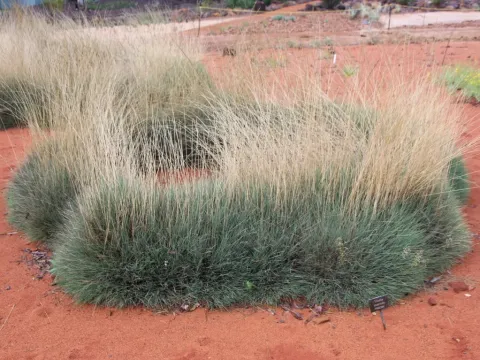
Triodia
Triodia
Triodia, commonly referred to as spinifex grass, is a resilient genus within the Poaceae family. Sowing these seeds requires careful timing to align with the start of the wet season or periods of reliable moisture, as the seeds have evolved to germinate only when conditions are optimal for survival.
What the section contains


Triodia
Preparation of the soil surface is essential. The seeds are relatively small and require a firm but well-drained seedbed. Broadcasting should be followed by light harrowing or coverage with a thin layer of organic mulch to protect the seeds from avian predators.
Planting depth should be shallow, typically not exceeding 1.5 centimeters. If buried too deeply, the seedlings will exhaust their energy reserves before reaching the surface, leading to poor establishment rates.
Spacing is a critical factor for success. As Triodia matures into large, clump-forming structures, maintaining adequate distance between individual plants is necessary to prevent competition for scarce underground water resources.
Seed treatment, including physical scarification, can significantly enhance germination speed. Due to the inherent dormancy of some wild seeds, pre-sowing treatments are often recommended by agronomists to ensure more uniform emergence.
Triodia is exceptionally adapted to extreme environmental conditions. It thrives in nutrient-poor soils, including deep sands and rocky outcrops where other vegetation fails to establish. It is a cornerstone species in arid ecosystem management.
The plant requires high solar radiation levels to maintain its physiological functions. It possesses specialized structural adaptations, such as curled, needle-like leaves coated with protective resins that drastically reduce water loss through transpiration.
Temperature tolerance is a hallmark of the Triodia genus. It effectively manages extreme heat without succumbing to thermal stress, making it an ideal candidate for stabilization of degraded lands in arid zones.
Soil drainage must be excellent. The plant cannot tolerate anaerobic conditions caused by waterlogging. The root system is deep and extensive, designed to tap into subsoil moisture during long periods of drought.
Minimal fertilization is required as the species is adapted to oligotrophic environments. Excessive application of synthetic fertilizers can disrupt the symbiotic relationships in the rhizosphere and potentially stunt the growth of the plants.
Fungal pathogens represent the most significant threat during periods of unexpected high humidity. When airflow is obstructed, mold and fungal spots can develop on the foliage, compromising the health of the clump.
Herbivory by locusts or grasshoppers can be problematic during outbreak years. While the rigid, resinous nature of the leaves serves as a deterrent, younger plants are more vulnerable and may require intervention.
Root-knot nematodes can impact plant vigor in susceptible soil types. Monitoring the root health of stressed clumps is necessary, as symptoms often appear late, making recovery difficult once the system is compromised.
Viral infections may occur, often transmitted by leaf-feeding insects. These infections manifest as chlorosis or stunted growth, which can be difficult to diagnose without laboratory analysis.
Integrated pest management remains the most effective strategy. By maintaining optimal planting density and ensuring proper soil aeration, the risk of disease outbreaks is significantly reduced, allowing the plants to remain resilient.