
Triodia pungens
Triodia pungens
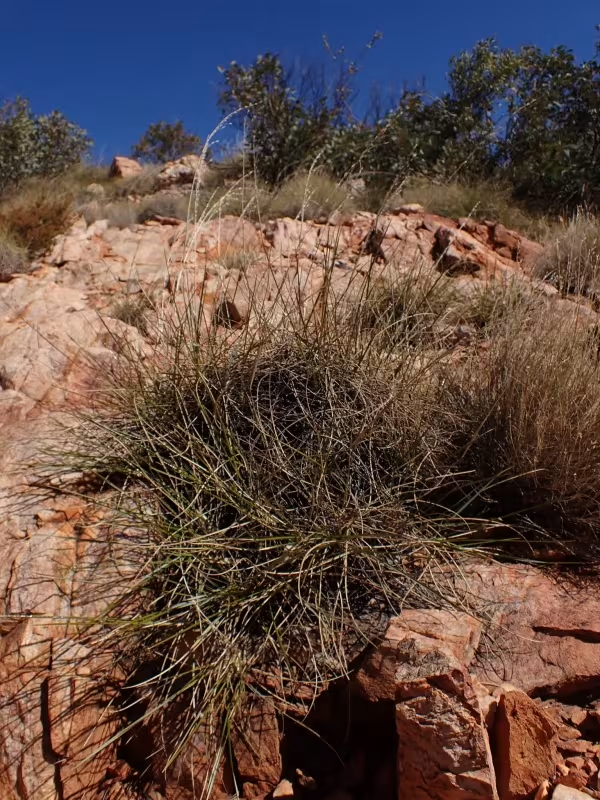
Description
Growing requirements
Triodia pungens, commonly known as soft spinifex, is a perennial grass species belonging to the Poaceae family. It is an iconic plant of the Australian arid and semi-arid zones, where it plays a foundational role in maintaining soil health and landscape structure.
The plant grows in dense hummocks that provide critical microhabitats for various arid-zone fauna. Its adaptation to harsh conditions is remarkable, characterized by sclerophyllous leaves that significantly reduce water loss through transpiration, allowing it to survive extreme heat.
Soil requirements for Triodia pungens are minimal, as it thrives on sandy, skeletal, or rocky soils that are otherwise unsuitable for most agricultural crops. It acts as a primary stabilizer, with its deep and intricate root system effectively preventing both wind and water erosion.
Climatically, it is fully adapted to regions with high solar radiation and prolonged drought periods. It does not require irrigation, making it a sustainable choice for large-scale ecological restoration projects in arid environments across Australia.
In terms of agricultural and land management usage, it is primarily valued for its role in preventing land degradation. While its fodder value is limited due to the coarse texture of the leaves, it remains an essential component of the ecosystem that supports native biodiversity and rangeland health.
Main diseases and pests
Wildfires are the most significant threat to Triodia pungens, as intense burns can devastate local populations. Although the species has evolved mechanisms for recovery after fire, the increasing frequency of fires in arid areas due to climate change poses a long-term risk.
The species is notably resistant to typical agricultural pests and pathogens. The high silica content in its leaves acts as a natural deterrent against most chewing insects and fungal diseases, minimizing the need for chemical plant protection measures.
Overgrazing by livestock represents another major threat, as trampling can destroy the fragile hummock structure, leading to soil compaction and subsequent loss of the plant's ability to retain moisture and stabilize the substrate.
Invasive weed species, often introduced in disturbed areas, can compete with Triodia pungens for limited water resources. Protecting the native vegetation from such disturbances is essential for maintaining the dominance of spinifex in its natural habitats.
Monitoring programs focusing on ecological restoration should prioritize the exclusion of invasive species and the management of grazing pressure to ensure the longevity of Triodia populations in restored rangelands.