
Triodia scariosa
Triodia scariosa
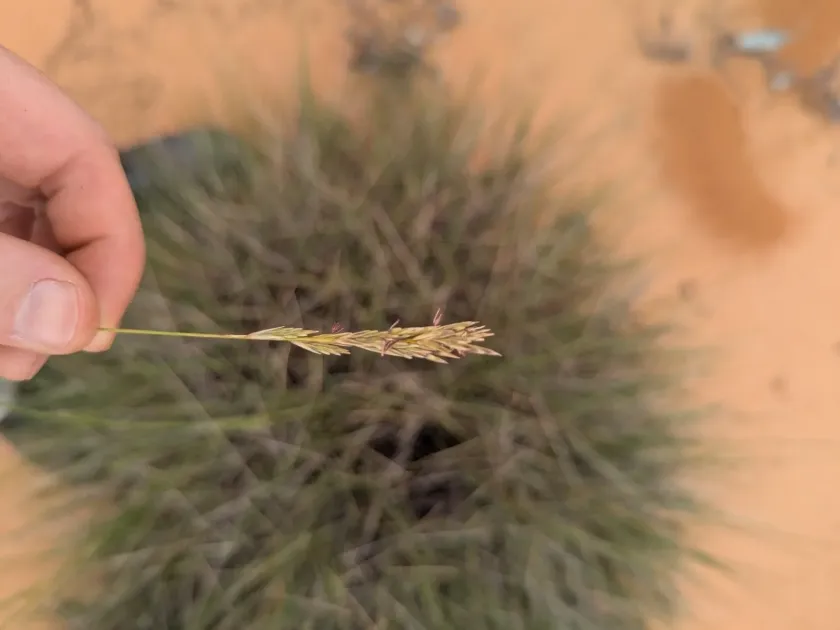
Description
Growing requirements
Triodia scariosa is a perennial grass species belonging to the Poaceae family. Native to the arid and semi-arid regions of Australia, this plant is well-adapted to survive in harsh environmental conditions characterized by extreme heat and periodic water scarcity.
The plant thrives in sandy and rocky soils, often forming extensive, dense tussocks that serve as a hallmark of the Australian outback landscape. Its ability to colonize nutrient-poor substrates makes it a key species in stable desert ecosystems.
Morphologically, the plant exhibits specialized xerophytic traits. The leaves are typically rigid and sharp, covered in a resinous coating that significantly reduces transpiration and helps the plant retain vital moisture during long dry spells.
From an agricultural and environmental perspective, Triodia scariosa is primarily recognized for its role in soil stabilization. By creating robust root systems and surface cover, it prevents sand movement and mitigates the effects of wind erosion in desert environments.
Although it is not classified as a commercial crop for forage production due to its harsh texture, the species provides essential habitat for various reptiles, insects, and small mammals within its natural native range.
Main diseases and pests
Triodia scariosa possesses a high level of innate resistance to common agricultural pests and plant diseases. The structural density of its leaves and the presence of specific resins act as a natural barrier against typical herbivores and pathogens.
Fire is the most significant environmental threat to the species, yet the plant has evolved a remarkable recovery mechanism. Its root crowns are often protected, allowing the species to resprout rapidly following wildfires, which helps it maintain dominance in its ecosystem.
The species is rarely impacted by conventional grain pathogens such as rusts or smuts, which typically affect domesticated cereal crops. Its survival strategy focuses on persistence in nutrient-poor environments rather than rapid biomass accumulation.
Invasive species competition represents a secondary threat to the stability of Triodia scariosa populations. Introduced grasses that utilize water more efficiently or reproduce faster can potentially displace the native tussocks in disturbed areas.
Management of this species is largely limited to conservation efforts. Given its low agricultural utility, there is no standardized chemical or biological control strategy for the plant, as it is viewed as a beneficial native groundcover rather than a target for pathogen suppression.