
Triodia schinzii
Triodia schinzii
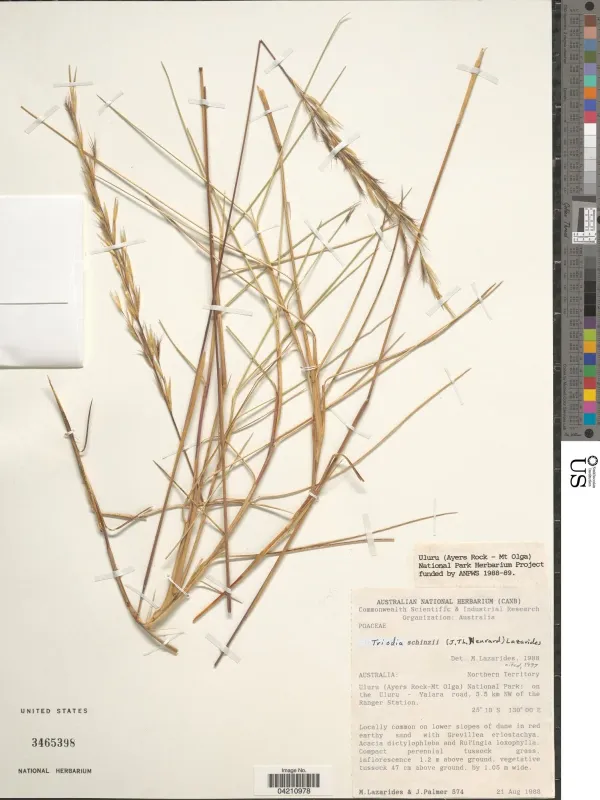
Description
Growing requirements
Triodia schinzii is a perennial grass species belonging to the Poaceae family. Native to the arid zones of Southern Africa, this plant has evolved to thrive in environments characterized by sparse precipitation and extreme heat.
The botanical structure of the plant includes narrow, xerophytic leaves and a robust root system. This physiological setup enables the plant to remain dormant during prolonged dry spells and recover quickly when minimal moisture is available.
Cultivation requirements involve sandy or loamy-sand soil compositions with high drainage capacity. The plant is highly intolerant to waterlogging, making proper soil preparation and terrain selection vital for successful establishment.
Climate needs are strictly tropical or subtropical, requiring high ambient temperatures for metabolic processes. It shows high resilience to direct solar radiation, making it an excellent candidate for regions where other forage crops fail.
Agronomic management focuses on preventing overgrazing, which can degrade the plant's recovery potential. Sustainable grazing cycles must be established to ensure the long-term viability of the field.
Harvesting
The primary agricultural use for Triodia schinzii is as a forage source in desert-margin farming systems. It provides essential biomass when other vegetation is scarce, supporting livestock herds in difficult environmental conditions.
Harvesting for fodder should occur before the plant reaches full senescence. Once the culms become lignified, their digestibility drops significantly, making it essential to time the cutting process accurately.
Harvesting techniques involve mechanical mowing followed by immediate drying. Because the plant is native to arid environments, it dries efficiently in the field, provided that air humidity remains low during the processing stage.
Storage requires well-ventilated dry areas to prevent fungal growth. Proper stacking of the harvested material ensures that the nutritional content is preserved for supplemental feeding during the winter or dry seasons.
- Monitor plant maturity levels weekly.
- Avoid harvesting during high-humidity periods.
- Ensure mechanical shredding to improve ingestion by cattle.
- Store in elevated structures to allow air circulation.