

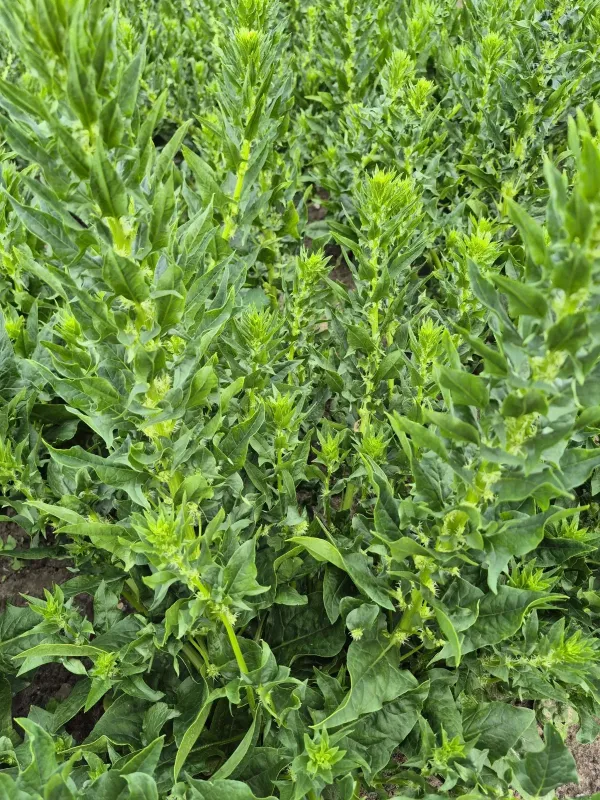
Description
Sowing dates
Spinach (Spinacia oleracea L.) is a cool-season leafy vegetable belonging to the Amaranthaceae family. It is highly valued for its nutritional content and short growth cycle, making it a popular choice for both commercial and home growers.
The optimal sowing time for spinach is early spring or late summer, as the crop thrives in temperatures between 15 °C and 18 °C. It is sensitive to day length; long days and high temperatures trigger bolting, where the plant prematurely produces a flower stalk.
For succession planting, seeds should be sown every 2 to 3 weeks to ensure a continuous supply of fresh leaves. In temperate regions, overwintering spinach by sowing in late autumn is a common practice for an early spring harvest.
Seeds are typically sown at a depth of 2–3 cm, with row spacing of 20–30 cm. Ensuring a consistent soil moisture level during the germination period is critical to achieve uniform crop emergence and healthy early growth.
Selecting the right variety is essential, as many modern hybrids are specifically bred for bolt resistance, which is a major advantage for late-spring or summer harvests in longer-day climates.
Growing requirements
Spinach prefers fertile, well-drained soils with a pH ranging from 6.5 to 7.5. It does not perform well in acidic soils, which often leads to poor nutrient uptake and stunted plant development.
Adequate water is vital for successful spinach production. Since the crop has a relatively shallow root system, consistent moisture is necessary. However, waterlogged soil must be avoided to prevent root diseases.
The plant requires moderate sunlight but can tolerate partial shade, especially during hotter months. Providing shade can help keep the leaves tender and delay the bolting process, extending the harvest window.
Organic matter, such as well-rotted compost, should be incorporated into the soil before planting to improve structure and fertility. Spinach is a heavy nitrogen user, and balanced fertilization supports rapid leaf growth.
Proper ventilation is also key; planting at the recommended density helps reduce the risk of humidity-related leaf diseases, ensuring that the crop remains healthy until the time of harvest.
Main diseases and pests
The crop is prone to various fungal issues, including alternaria leaf spot and anthracnose, which are particularly problematic in damp, humid conditions. Rhizoctonia and root rot pathogens can also cause significant damage.
Soil-borne diseases such as pythium root rot and fusarium root rot often strike when soil drainage is poor. Rotation is the best defense, and growers should avoid planting in areas where spinach was grown in the previous season.
Viral infections, such as tomato mosaic virus and tobacco mosaic virus, are major concerns. Because these viruses are transmitted by sap-sucking insects, such as aphids, pest management is essential for disease prevention.
Verticillium wilt can affect plant vigor, causing leaves to yellow and wilt prematurely. While there is no direct cure for viral or certain fungal soil infections, strict hygiene and the use of resistant varieties help minimize risk.
Insects like leaf miners and aphids can cause direct mechanical damage to the foliage and serve as vectors for diseases. Monitoring the fields regularly allows for timely intervention using integrated pest management strategies.
Harvesting
Harvesting usually begins 30 to 50 days after sowing, depending on the variety and local climate conditions. The crop is ready when the plant has developed a sufficient number of healthy, fully expanded leaves.
Growers can harvest by cutting the entire plant at the base or by picking the outer leaves individually. The latter method allows the central heart of the plant to continue growing, providing multiple harvests.
It is best to harvest spinach early in the morning when the leaves are turgid and cool. This practice significantly improves the shelf life and quality of the produce compared to harvesting during the heat of the day.
After harvest, spinach should be cooled immediately to near-freezing temperatures (0–2 °C). Due to its high respiration rate, the crop will deteriorate quickly at room temperature, losing its nutritional value and crispness.
Proper post-harvest handling, including refrigeration and moisture control, is crucial for marketability. Fresh spinach can be stored for about two weeks under ideal cold storage conditions, maintaining high quality for consumers.
In brief
36
Crop diseases
Content graph
Crop diseases · 36
Alternaria leaf spotAnthracnoseAphanomyces root rotAscochyta blightAster yellowsBacterial leaf spotBacterial soft rotBeet curly topBeet necrotic yellow vein virusBeet western yellowsCercospora leaf spotCladosporiosisCucumber mosaicFusarium root rotFusarium wiltImpatiens necrotic spot virusLate blightParatrichodorusPeronosporosisPhoma leaf spotPhyllosticta leaf spotPhyllosticta leaf spotPlant RustPleospora leaf spotPowdery mildewRhizoctonia root rotRoot-knot nematodeSpinach curly topSpinach curly topStemphylium leaf spotTobacco mosaic virusTomato mosaic virusTurnip mosaicVerticillium wiltWhite rustWhite smut of spinach
Content graph
Connections · Spinach
Most often together:
Marketplace
Products · 2
