
Impatiens necrotic spot virus
Impatiens necrotic
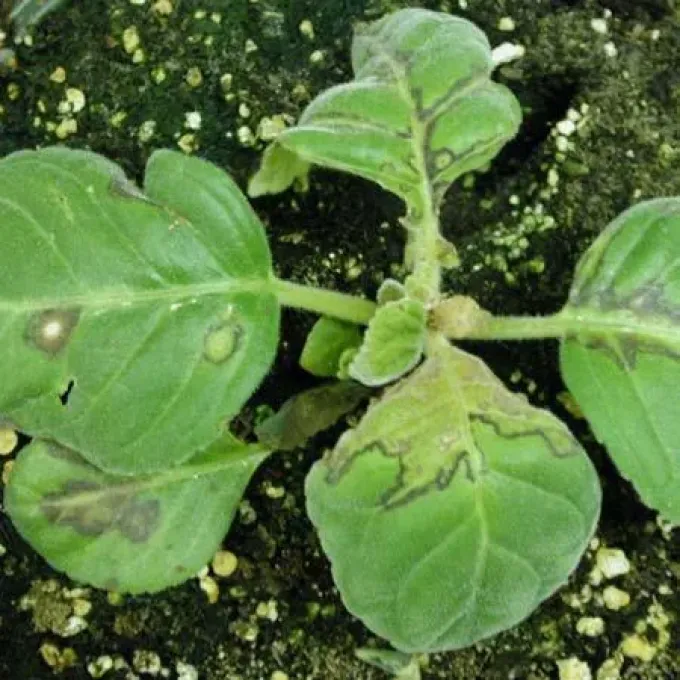
Description
Symptoms
Symptoms of INSV infection are highly variable and can mimic other physiological disorders, making accurate diagnosis challenging without laboratory testing.
Common clinical signs include necrotic spots, concentric ring patterns, leaf yellowing, chlorotic mottling, and severe stunting of plant growth.
In many ornamental plants, infection results in distorted foliage, stem necrosis, and flower deformation which ruins the aesthetic value of the crop.
Susceptible host plants frequently include:
- Anemone coronaria
- Browallia speciosa
- Calceolaria
- Campanula carpatica
- Pepper (Capsicum)
- Clerodendrum thomsoniae
- Cyclamen persicum
- Exacum affine
In advanced stages, the plants exhibit wilting and dieback as the virus disrupts the internal biological processes and nutrient transport mechanisms.
Pathogen
The causal agent of this disease is the Impatiens necrotic spot virus (INSV), a serious plant pathogen belonging to the Orthotospovirus genus.
This virus has a wide host range, infecting hundreds of species including both ornamental flowers and vegetable crops in greenhouses worldwide.
INSV is an RNA virus that systemically colonizes the plant, moving through the vascular system to reach all parts of the host organism.
The primary vector for the transmission of this virus is the western flower thrips (Frankliniella occidentalis), which spreads the disease efficiently.
Larval thrips acquire the virus by feeding on infected plant tissues and remain infectious carriers throughout their entire adult lifespan.
Conditions for development
The epidemiology of INSV is driven by the population density and activity of its insect vector, the western flower thrips.
Greenhouse environments provide ideal conditions for the disease, especially when temperatures remain within the preferred range for thrips (20–28°C).
High relative humidity and poor weed control around greenhouse perimeters facilitate the survival and spread of both the vector and the virus.
Movement of infested plant materials, such as cuttings or seedlings, between different greenhouse facilities is the primary cause of regional outbreaks.
The presence of weeds in and around the growing area provides a reservoir for the virus during the off-season, leading to new infections in spring.
Why it matters
INSV is considered a devastating pathogen because there are no curative measures available once a plant is systemically infected.
The economic impact is significant as growers are forced to discard entire crops to prevent the further spread of the viral infection.
Loss of marketability is immediate, as infected plants become unsellable due to their unsightly appearance and poor health condition.
For vegetable growers, the disease can lead to substantial yield reductions and loss of crop quality, especially in greenhouse-grown peppers.
Management costs are high, as growers must invest heavily in sanitation, vector monitoring, and intensive chemical or biological control programs.
Protection
Effective management relies on a strict integrated pest management (IPM) program focused primarily on the suppression of western flower thrips.
The use of yellow or blue sticky cards is essential for early detection and monitoring of thrips populations within the growing environment.
Rigorous sanitation practices, including the removal of all weeds inside and outside the greenhouse, are critical to eliminating virus reservoirs.
Infected plants should be identified, immediately rogued, and safely disposed of to reduce the inoculum level in the greenhouse.
Implementing strict quarantine protocols for new plant material and using only certified, virus-tested stock are vital steps in preventing initial outbreaks.
Pathogens and affected parts
Affects crops · 23
Discussion
No discussions yet — be the first.