
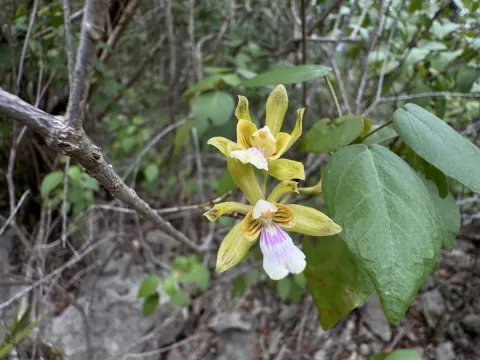
Psychilis
Psychilis
Psychilis is a genus of epiphytic orchids belonging to the Orchidaceae family. Native to the Caribbean islands, these plants naturally grow on trees and rocky outcrops, thriving in the warm and humid climate of the tropical forest canopy.
What the section contains


Psychilis
When cultivating Psychilis indoors, providing bright but indirect light is essential. An eastern or western window exposure is ideal, as direct noon sunlight can scorch the foliage and damage the delicate pseudobulbs of the plant.
The potting medium must mimic the natural environment. A mix of fir bark, charcoal, and perlite provides the necessary drainage and airflow for the roots. It is crucial to choose pots with ample drainage holes to prevent waterlogging.
Psychilis requires a distinct temperature cycle to flourish. Daytime temperatures should stay between 22 and 26 degrees Celsius, while a drop of several degrees at night helps stimulate the orchid's metabolism and subsequent flowering.
Watering should be carried out carefully, allowing the medium to dry out almost completely between sessions. During the resting period, the plant requires significantly less water to mimic the dry season of its native habitat.
Common pests affecting Psychilis include spider mites, mealybugs, and scale insects. These pests thrive in dry indoor conditions and can quickly colonize the plant if left unchecked, causing yellowing leaves and stunted growth.
Fungal and bacterial diseases are the primary threats when ventilation is poor or humidity remains high for too long. Root rot is particularly dangerous and is usually the result of using overly decomposed or compacted potting media.
To control pest populations, systemic insecticides or neem oil can be applied, ensuring thorough coverage of both leaf surfaces. For fungal issues, ensuring good air circulation and removing affected parts is the first step in remediation.
Regular sanitation of the growing area helps minimize the risk of infection. Always use sterile tools when pruning or repotting to prevent the spread of viruses that can be transmitted through contact with infected tissue.
Balanced fertilization using a dilute, orchid-specific formula during the active growing season strengthens the plant's natural resistance. Avoiding over-fertilization is key, as salt buildup can damage the sensitive root system over time.