
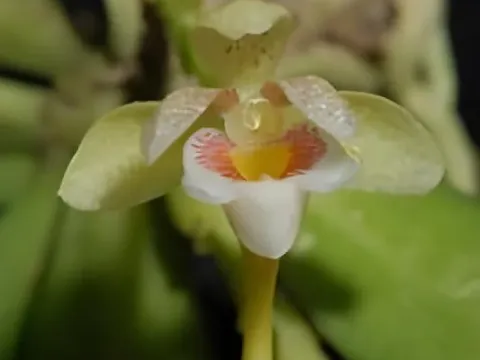
Pennilabium
Pennilabium
Pennilabium is a genus belonging to the Orchidaceae family, consisting of rare, miniature epiphytic orchids. These plants are native to the tropical forests of Southeast Asia, where they thrive in high-humidity environments.
What the section contains

Pennilabium
Successful cultivation requires a stable microclimate with high relative humidity levels, typically maintained between 70% and 80%. Good air movement is essential to prevent fungal outbreaks and simulate their natural canopy habitat.
The temperature range should be kept moderate, ideally between 20°C and 25°C during the day. A significant diurnal temperature drop of approximately 5-7 degrees is necessary to encourage healthy growth and stimulate flowering cycles.
For planting, epiphyte mounts such as tree fern slabs or cork bark are highly recommended. This mounting technique ensures optimal aeration for the root system and prevents the substrate from staying waterlogged for too long.
Light requirements involve bright, diffused sunlight. Direct exposure must be avoided at all costs, as the delicate foliage is highly prone to photic damage and leaf scorch during the peak hours of the day.
The primary threat to Pennilabium is root rot, which is almost exclusively caused by overwatering or poor drainage. Once the root system begins to decay, the entire plant rapidly loses its ability to uptake nutrients.
Spider mites are common pests that thrive in low-humidity environments. They can quickly damage leaf tissues, leading to reduced photosynthesis and overall decline in the plant's structural integrity.
Scale insects and mealybugs can also infest the plants. These pests often settle in the tight leaf axils, making them difficult to detect until the infestation has become severe and requires targeted treatment.
Bacterial and fungal infections, such as leaf spot, can occur if water remains on the leaves for extended periods. It is vital to ensure that the crown of the plant stays relatively dry after watering.
Regular maintenance practices, including the use of sterilized tools and prompt removal of dead biomass, are crucial to maintaining a healthy and disease-free collection of these exotic plants.