
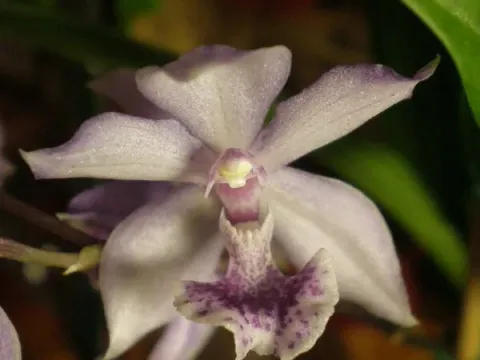
Paradisanthus
Paradisanthus
Paradisanthus is a genus of rare perennial epiphytic plants belonging to the Orchidaceae family. In their natural habitat, these plants are native to the tropical rainforests of Brazil, where they thrive as epiphytes on tree trunks in shaded and humid environments.
What the section contains
Paradisanthus
In cultivation, this genus requires a microclimate that closely mimics its original habitat. The plants need high humidity levels, ideally maintained between 70% and 85%, to ensure proper development and prevent the desiccation of their delicate aerial roots.
Providing bright, indirect light is essential for the healthy growth of Paradisanthus. Direct sunlight should be strictly avoided as it can cause severe leaf scorch and compromise the plant's overall health and physiological functions.
A stable temperature range is vital, ideally between 20°C and 25°C. The plants are sensitive to sudden temperature fluctuations and cold drafts, which can cause significant stress, leading to flower drop and reduced vigor.
The substrate must be highly porous and well-aerated, typically consisting of pine bark, sphagnum moss, and charcoal. Watering should be done with soft, room-temperature water, ensuring that the roots are kept moist but never waterlogged to avoid root rot.
Bacterial and fungal rot are the most significant threats to Paradisanthus, primarily caused by improper watering practices and poor air circulation around the plant. Ensuring the substrate drains quickly is the best way to prevent these pathogens.
Scale insects are common pests that feed on the sap of the plant, often causing stunted growth and yellowing leaves. Manual removal combined with the application of appropriate systemic insecticides can effectively manage these infestations.
Spider mites frequently attack the plants in environments with low relative humidity. Regular misting and maintaining optimal humidity levels act as a deterrent, while targeted acaricide treatments should be used in case of a severe outbreak.
Mealybugs can often be found hiding in the leaf axils, making them difficult to detect. Regular inspections of these areas are crucial, as early intervention prevents the rapid colonization of the plant by these sap-sucking insects.
Nutrient toxicity, caused by the accumulation of salts from fertilizers in the substrate, can harm the sensitive roots of the orchid. It is recommended to flush the substrate periodically with clean water to remove excess mineral deposits.