
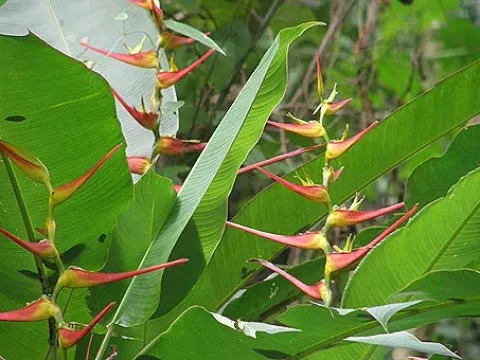
Heliconia
Heliconia L.
Heliconia (Heliconia L.) is a stunning perennial rhizomatous crop belonging to the Heliconiaceae family, originating from the tropical rainforests of South and Central America. The plant is recognized for its large, banana-like foliage and vibrant, intricately shaped bracts.
What the section contains


Heliconia
For successful growth, Heliconia requires consistently high temperatures, not falling below 18-20°C, and high air humidity, ideally maintained at 70-80%. In commercial greenhouse settings, it is essential to provide bright, diffused light, as direct sunlight can scorch the delicate leaf blades.
The soil substrate must be loose, fertile, and possess excellent drainage properties to prevent waterlogging around the root system. An optimal mixture consists of peat, leaf mold, and coarse sand, often enriched with well-rotted organic matter.
Irrigation should be regular and abundant during the active growing season, with a gradual reduction during the winter dormancy period. It is critical to use room-temperature water, as cold irrigation water can shock the root system and lead to severe rot issues.
The primary agricultural use of Heliconia is in commercial floriculture, where it is highly valued as a premium cut flower. Due to its striking aesthetic appeal and long vase life, it remains a sought-after commodity in the high-end international floral trade.
The main pests affecting Heliconia in controlled environments include spider mites and scale insects, which proliferate rapidly when humidity levels are not properly managed. The plant is also susceptible to mealybugs that congregate within the leaf axils.
Fungal diseases, such as root rot and leaf spot, are prevalent in conditions with excessive irrigation and poor ventilation. Preventive measures center on maintaining strict cultivation hygiene and conducting regular monitoring of the crop canopy.