
Brazilian Heliconia
Heliconia brasiliensis
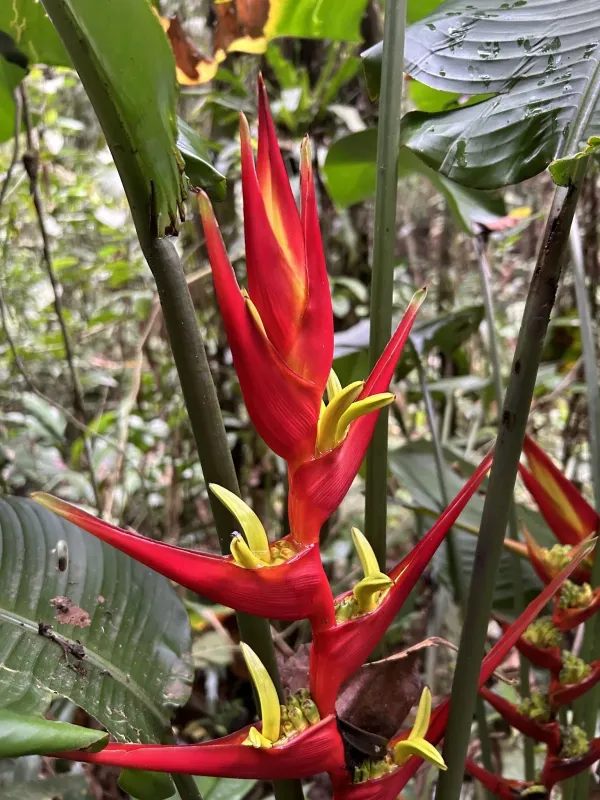
Description
Sowing dates
The propagation of Brazilian Heliconia (Heliconia brasiliensis) in commercial settings is primarily achieved through vegetative methods, specifically by dividing rhizomes or using basal offsets. The optimal time for planting is during the spring and summer months when the plant enters a phase of vigorous underground development.
Seed propagation is less common due to low germination rates and a lengthy waiting period that can span several months. Before sowing, seeds require mandatory scarification and soaking in warm growth stimulants to break dormancy and improve viability.
The chosen planting site must feature loose, humus-rich soil with excellent drainage capabilities. A drainage layer is essential to prevent water stagnation around the root system, which is crucial for avoiding root rot in the early developmental stages.
For successful establishment, the temperature should be maintained between 22 and 25 degrees Celsius. Lower temperatures significantly retard the development of the root system, ultimately delaying the onset of commercial-grade flower production.
Planting density is calculated based on the shrub's habit, which can reach substantial dimensions for this species. In greenhouse conditions, growers typically limit planting to 2–3 plants per square meter to ensure adequate aeration and light penetration for every individual.
Growing requirements
Brazilian Heliconia belongs to the Heliconiaceae family and is a native inhabitant of humid tropical forests. For optimal growth, the crop requires a stable, high ambient humidity level, ideally consistently maintained between 70 and 80 percent.
The plant is highly sensitive to light intensity, preferring bright, diffused sunlight. Direct solar radiation during midday can cause severe scorching on the large leaf blades, necessitating the use of shading systems in hotter climates.
The substrate must be slightly acidic or neutral, with a pH range between 5.5 and 6.5. A mixture consisting of peat, coconut fiber, and sand, enriched with compost, is highly recommended to ensure a consistent supply of nutrients throughout the growth cycle.
Irrigation must be both regular and generous, particularly during the active flowering phase. The crop does not tolerate the drying out of the root ball, yet water stagnation in containers or soil is equally destructive, as it leads to root hypoxia.
Fertilization is performed using balanced mineral fertilizers with an increased ratio of potassium and phosphorus during the inflorescence development period. Nitrogen application should be moderate to support foliage growth without compromising the plant's reproductive output.
Yield
The economic value of Brazilian Heliconia is centered on the production of high-quality cut flowers. Yield is directly dependent on environmental conditions and the maturity of the plant, which typically begins producing floral stems by its second or third year.
A single mature shrub, under proper management, can yield between 5 and 10 inflorescences per season. The flowering window is extended, allowing for selective harvesting over a significant duration, which is advantageous for labor distribution.
Yields in protected environments are substantially higher than those in open tropical conditions due to the ability to precisely control climatic parameters. Commercial plantations in suitable regions can remain productive for 5 to 7 years without the need for replanting.
The quality of the cut flower is defined by stem length and the density of the bracts, which possess a characteristic waxy texture. A well-formed inflorescence should exhibit sufficient rigidity and a long vase life, often lasting two to three weeks with proper post-harvest care.
Grading is performed based on stem height and bract color vibrancy, which serve as the primary benchmarks for pricing in the international floral market. Standardization allows for the successful export of blooms over long distances.
Main diseases and pests
Among the primary pests, spider mites and mealybugs pose the greatest threat, particularly in conditions of low air humidity. These pests feed on sap from the leaves, leading to stunted growth, deformation, and an overall decline in plant health.
Aphids and scale insects also frequently attack young shoots and developing inflorescences. Routine monitoring of the underside of leaves and the application of systemic insecticides are essential strategies for maintaining pest populations at manageable levels.
Root rots caused by Pythium and Phytophthora fungal species are the most serious diseases for this crop. These pathogens primarily emerge due to poor irrigation management and inadequate aeration of the soil within greenhouse environments.
Leaf spots of fungal or bacterial origin often manifest when moisture stagnates on the surface of the leaves. Maintaining proper air circulation within growing facilities serves as the most effective preventative measure against such infections.
To protect the crop from pathogens, strict hygiene is recommended during the harvest process. This includes using disinfected tools and promptly removing symptomatic plant parts to prevent the spread of fungal spores across the plantation.
Harvesting
Harvesting of Brazilian Heliconia is carried out when the bracts are fully colored but have not yet begun to wither. Harvesting too early prevents the inflorescence from opening fully in a vase, while harvesting too late results in a significant loss of decorative appeal.
The stems are cut using a sharp, sterilized pair of secateurs at an angle, positioned as close to the base of the shoot as possible. Sterile practice is vital to prevent the entry of pathogens into the vascular system of the mother plant.
Immediately upon harvest, the stems must be placed in containers of clean water or a specialized floral preservative solution that inhibits bacterial growth. This step is critical for maintaining turgor pressure and maximizing the longevity of the cut flower.
Transport must occur under moderate temperature conditions, avoiding exposure to drafts or direct sunlight. Heliconia is extremely sensitive to rapid temperature fluctuations, which can trigger discoloration of the bracts during transit.
Post-harvest, the plantation area must be cleared of all plant debris, which can otherwise harbor pests or serve as a reservoir for fungal spores. Thorough cleanup ensures a clean environment, promoting healthy and stable flowering in the subsequent season.