
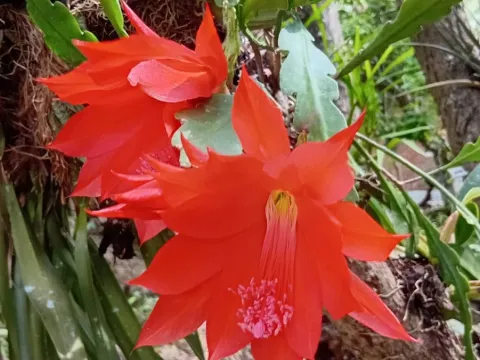
Disocactus
Disocactus
Disocactus is a genus of epiphytic cacti belonging to the Cactaceae family, native to the tropical forests of Central and South America. These plants are uniquely adapted to growing on trees, utilizing their flattened or ribbed stems to absorb moisture and nutrients from their environment.
What the section contains


Disocactus
These cacti thrive in bright, filtered light. Exposure to direct midday sun can cause severe tissue damage and bleaching of the stems. A stable indoor environment with good ventilation is essential for healthy growth and prolific flowering.
The potting medium must be porous, well-draining, and rich in organic matter to mimic the natural epiphytic niche. A mixture of peat moss, perlite, bark, and charcoal is highly recommended to ensure proper root oxygenation.
Watering requirements follow a cycle: keep the soil moist but never waterlogged during the active growing season. During the winter dormancy, watering should be significantly reduced to allow the plant to rest and prepare for the next blooming cycle.
Humidity management is vital for Disocactus success. Maintaining a high humidity environment through regular misting or using a humidity tray is necessary, especially in arid indoor climates or during heating seasons.
Root rot is the most common threat to Disocactus, usually caused by overwatering or poor drainage. Once established, this condition can spread rapidly, leading to the collapse of the plant's structural integrity.
Mealybugs are frequent pests that congregate in the crevices of the stems, feeding on the plant's sap. Their presence is often indicated by a white, cottony substance covering the affected areas.
Scale insects also pose a threat, appearing as small, brown, bump-like structures on the stems. They are difficult to eradicate and can significantly weaken the host plant over time.
Spider mites thrive in low-humidity conditions and leave behind fine webbing and stippling on the skin of the cactus. Regular monitoring and maintaining proper humidity are the best deterrents against these pests.
Effective pest management involves isolating infected plants and applying appropriate horticultural oils or systemic insecticides. Early detection is crucial to preventing long-term damage and maintaining the aesthetic value of the plant.