
Bergeranthus
Bergeranthus
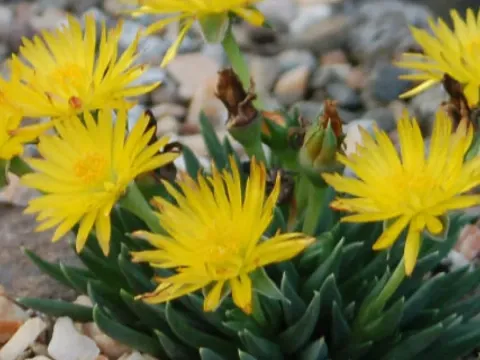
Bergeranthus is a genus of perennial succulent plants belonging to the Aizoaceae family. These plants are characterized by their tufted, fleshy, and triangular leaves, which create a grass-like appearance while serving as efficient water storage organs.
What the section contains

Bergeranthus
Native to the Eastern Cape province of South Africa, these plants are adapted to arid, rocky environments. Their natural habitat dictates their requirements for intense light exposure and poor, well-draining mineral soils, which are essential for maintaining their compact growth habit.
When cultivating Bergeranthus, light intensity is the most critical factor. The plant requires maximum sun exposure; otherwise, it will etiolate, losing its characteristic shape and failing to produce its vibrant, yellow, daisy-like flowers.
Soil composition should strictly follow the needs of xerophytic plants. A mixture composed of coarse sand, pumice, or perlite combined with a small amount of mineral-rich substrate ensures the necessary drainage to prevent the accumulation of moisture around the root neck.
The watering regimen must be cyclic, mirroring the seasons of their native habitat. During the active growing phase in spring and summer, the soil should be allowed to dry out completely between waterings, while winter care requires a dormant period with minimal to no hydration.
Root rot is the primary threat to Bergeranthus, usually caused by overwatering or the use of substrates that hold too much moisture. Once the roots are compromised by rot, the plant is often difficult to salvage.
Mealybugs are common pests that infiltrate the tight junctions between the leaves. Regular inspection of the plant's core is necessary for early detection, and localized application of contact insecticides can effectively manage small infestations.
Spider mites may appear in conditions where there is insufficient airflow or extremely dry atmosphere. Maintaining good ventilation around the plants helps prevent the proliferation of these microscopic pests and improves overall plant vigor.
Fungal issues are rare but can occur if the humidity levels remain too high for extended periods, especially during cloudy weather. Ensuring proper air circulation and using top-dressing materials like decorative gravel helps keep the lower leaves dry.
In addition to pests and diseases, environmental stress caused by sudden temperature drops in damp conditions can negatively affect the plant's health. Therefore, protection from freezing temperatures while keeping the root zone dry is vital for long-term success.