

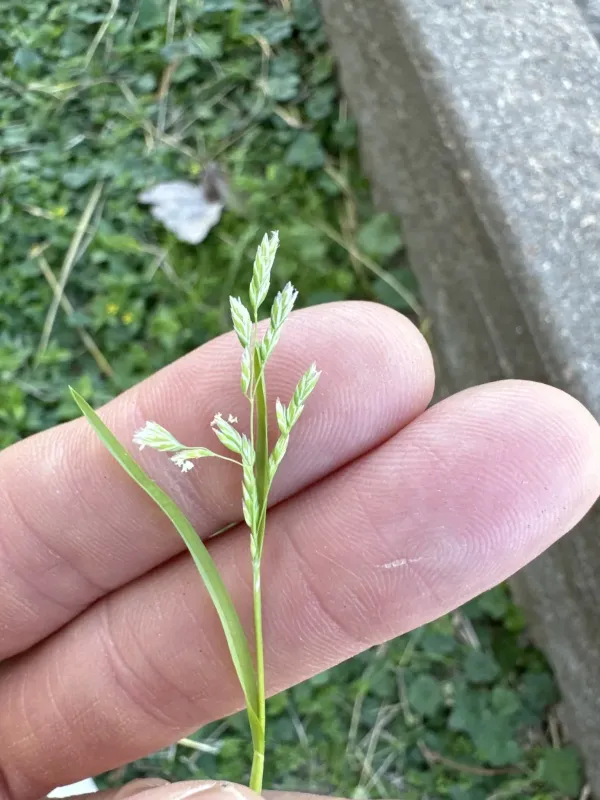
Description
Sowing dates
Annual meadow grass belongs to the Poaceae family and is recognized as one of the most successful colonizing species in diverse agricultural environments.
The germination period usually occurs during cool spring or autumn months, with seeds remaining viable in the soil for extended periods of time.
This species exhibits a rapid reproductive cycle, often producing seeds within a few weeks of germination, which creates a continuous bank of seeds.
In temperate zones, it behaves as a winter annual, but in areas with constant moisture, it can germinate and flower throughout the entire growing season.
Agricultural sowing practices for this grass require precise seedbed preparation and moisture management to ensure optimal establishment rates.
Growing requirements
The plant has a cosmopolitan distribution, thriving across a wide range of climatic conditions from temperate regions to alpine environments.
It prefers moist, compacted soils and is frequently found in areas with high traffic, such as golf courses, lawns, and trampled pasture land.
Annual meadow grass is sensitive to drought, which often leads to the senescence of its aerial parts during prolonged periods of high heat.
Nutrient requirements are relatively high, as the plant responds vigorously to nitrogen application, which promotes dense tillering and seed production.
Effective site management involves aeration and controlled irrigation to minimize the competitive advantage that this species gains in compacted soils.
Main diseases and pests
The species is highly susceptible to dollar spot and fusarium patch, which are common fungal diseases in intensive turf management systems.
Red thread disease can cause significant aesthetic damage, especially during periods of high humidity and slow growth of the grass foliage.
Pests such as cutworms and leatherjackets can cause severe damage to the root system, leading to patchiness and localized death of the plant.
Viral infections, including various mosaic viruses, can be transmitted through mechanical means during mowing or other maintenance activities.
Integrated pest management strategies focusing on cultural practices, such as balanced fertilization and proper mowing height, are essential for control.
Harvesting
While often considered a weed in many crops, annual meadow grass is occasionally harvested as part of mixed forage stands in permanent pastures.
The timing of the harvest is critical to ensure that the biomass is collected before the seeds reach maturity, preventing further field infestation.
Mechanical harvesting equipment must be cleaned thoroughly after working in infested fields to prevent the spread of viable seeds to other clean areas.
When used for grazing, it provides highly palatable forage, though its shallow root system makes it vulnerable to overgrazing during dry summers.
Proper storage of the harvested forage is necessary to maintain nutrient value, as the fine texture of the leaves makes it prone to rapid decomposition.
Reference
Connections · Annual meadow grass
Most often together:
Marketplace
Products · 28


Alfa-Prometrin
Zhejiang Zhongshan Chemical Industry Group Co., Ltd.
Herbicides
1
1
22 offers
4.89 €per pack
Buy


Centor, KE (clethodim, 240 g/l)
Jiangsu Fengshan Group, Nanjing Fengshan Chemical
Herbicides
0
0
1 offer
60.03 €per pack
Buy



Centurion k.e. herbicide with surfactant 'Amigo'
Arysta LifeScience
Herbicides
0
0
No offers
—
Details

AGROACETOXCHLOR, K.E., HERBICIDE (ACETOXCHLOR, 900 G/L)
Shandong Qiaochang Chemical
Herbicides
0
0
No offers
—
Details

Trinity, CS (diflufenican, 40 g/l + chlorotoluron, 250 g/l + pendimethalin, 300 g/l)
Adam Aghan Ltd., Israel
Herbicides
0
0
No offers
—
Details