
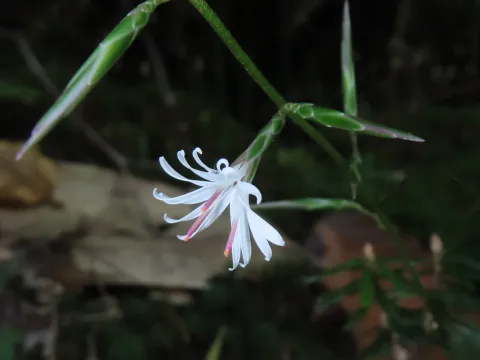
Ainsliaea
Ainsliaea DC.
Ainsliaea is a genus of perennial herbaceous plants belonging to the Asteraceae family. These plants are native to the forest regions of East Asia, primarily found in China, Japan, and Southeast Asia, where they thrive in shaded and moist forest floor environments.
What the section contains

Ainsliaea
Successful cultivation requires soil that is rich in organic matter and possesses excellent drainage properties. Ainsliaea performs best in partial shade, mimicking the natural light conditions provided by a dense tree canopy, which protects it from intense midday sun exposure.
The plant requires a stable climatic environment with moderate temperatures throughout the growing season. While generally hardy, the plants are susceptible to physiological stress when exposed to extreme droughts or sudden, severe temperature fluctuations.
Botanically, the genus is recognized by its basal leaf rosettes and flower heads that frequently exhibit cleistogamy. This reproductive strategy, where self-pollination occurs within unopened flowers, allows for successful propagation even when external environmental conditions are less than optimal.
Economic and agricultural interest in Ainsliaea is primarily driven by its traditional medicinal applications. Scientific research has highlighted the presence of sesquiterpene lactones in its tissues, suggesting potential applications in the development of anti-inflammatory and antioxidant pharmaceutical products.
The most significant threats to Ainsliaea arise from fungal infections triggered by poor agricultural management, particularly excessive soil moisture. Root rot is a common issue when drainage is inadequate, leading to the rapid decay of the plant's crown and roots.
Slugs and snails pose a consistent threat to the foliage, especially in moist and shaded garden conditions. These pests can cause significant damage to the leaf rosettes, reducing the plant's overall vigor and attractiveness, making manual control or biological barriers necessary.
Powdery mildew may occur if planting density is too high or if air circulation around the foliage is restricted. Ensuring proper spacing between plants and maintaining a clean growing area significantly lowers the incidence of this fungal disease.
Soil-dwelling insects can cause damage to the root system, potentially weakening the plant during the early growth stages. Integrated pest management (IPM) practices, such as soil monitoring and avoiding unnecessary irrigation, are crucial for maintaining healthy populations.
Preventative maintenance, including the selection of disease-free propagation stock and the regular removal of plant debris, is essential. A robust approach to sanitation minimizes the environment favorable for pathogens, ensuring the health and longevity of the Ainsliaea crop.