
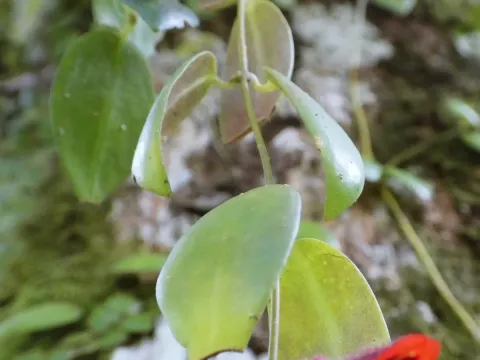
Aeschynanthus
Aeschynanthus Jack
Aeschynanthus, commonly known as the lipstick plant, is a genus of evergreen plants within the Gesneriaceae family. These plants are native to the tropical regions of Southeast Asia, where they primarily grow as epiphytes on tree branches, thriving in warm and humid rainforest environments.
What the section contains
 Aeschynanthus evrardii
 Pellegr.
Aeschynanthus evrardii
Aeschynanthus evrardii Pellegr.
 Aeschynanthus parvifolius
 R. Br.
Aeschynanthus parvifolius
Aeschynanthus parvifolius R. Br.
 Aeschynanthus radicans tricolor
Aeschynanthus radicans Jack x A. tricolor Hook.
Aeschynanthus radicans tricolor
Aeschynanthus radicans Jack x A. tricolor Hook.
 Aeschynanthus speciosus
 Hook.
Aeschynanthus speciosus
Aeschynanthus speciosus Hook.
 Aeschynanthus tricolor
 Hook.
Lipstick plant
Aeschynanthus radicans Jack
Aeschynanthus tricolor
Aeschynanthus tricolor Hook.
Lipstick plant
Aeschynanthus radicans Jack
Aeschynanthus
Cultivation requirements for Aeschynanthus include bright, indirect light, which is essential for healthy foliage and successful flowering. Exposure to harsh, direct sunlight during peak hours can cause irreversible leaf scorch, while deep shade will severely limit the plant's growth potential.
The substrate must be highly porous and well-draining to mimic the natural epiphytic growing conditions. A mix consisting of orchid bark, perlite, and high-quality peat or coco coir is recommended to provide both moisture retention and adequate aeration for the sensitive root system.
High humidity levels (above 60%) are crucial for the vitality of the plant. Regular misting or the use of a humidifier helps maintain the necessary moisture level, especially during the winter months when indoor heating systems tend to dry out the ambient air significantly.
Watering should be balanced: the soil should remain consistently moist but never waterlogged. It is vital to use lukewarm, soft water for irrigation to avoid mineral buildup in the substrate, which can lead to tip burn and reduced nutrient uptake efficiency.
Spider mites are the most common pest associated with Aeschynanthus, particularly in environments with low humidity. These pests feed on the cell sap, leading to stunted growth and the appearance of fine webbing on the leaves, requiring prompt intervention with miticides.
Mealybugs and scale insects may also infest the plant, usually clustering in the leaf axils or along the stems. Regular inspection and wiping the foliage with an alcohol-based solution are effective manual control methods for early-stage infestations.
Root rot, often caused by fungal pathogens such as Pythium or Phytophthora, is the most destructive disease. It is almost always a consequence of poor drainage and overwatering, emphasizing the need for strict adherence to irrigation schedules.
Botrytis blight may affect the flowers and foliage if ventilation is poor and humidity remains excessively high for prolonged periods. Increasing airflow around the plant is a critical preventative measure against this type of fungal colonization.
Consistent environmental conditions are necessary to prevent physiological disorders such as premature flower drop. By maintaining stable temperatures and avoiding sudden drafts, gardeners can significantly improve the longevity and overall health of the specimen.