
Aeschynanthus evrardii
Aeschynanthus evrardii Pellegr.
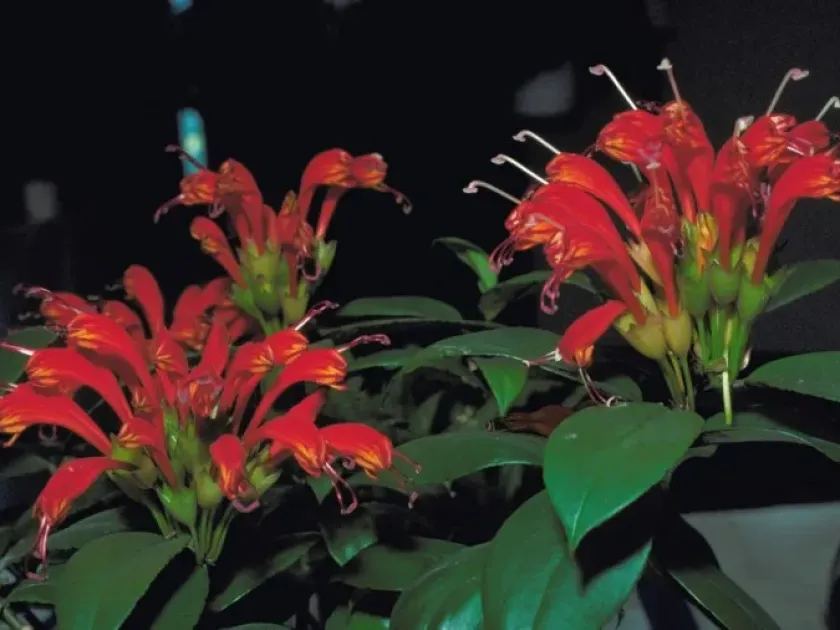
Description
Growing requirements
Aeschynanthus evrardii is an epiphytic species belonging to the Gesneriaceae family. In its natural habitat, this plant thrives in the tropical rainforests of Southeast Asia, where it typically grows on tree trunks, benefiting from the humid and warm climate.
Successful cultivation of this species requires a substrate that mimics its natural epiphyte environment. The soil mix should be highly porous and well-draining, consisting of components such as orchid bark, sphagnum moss, charcoal, and a small portion of peat moss.
High relative humidity is essential for the health of Aeschynanthus evrardii. In dry indoor conditions, frequent misting or the use of humidifiers is necessary to prevent leaf edges from drying out and to maintain healthy physiological processes.
Lighting requirements involve bright, indirect sunlight. Direct exposure, especially during the midday hours, should be avoided as it can scorch the foliage and cause significant damage to the plant's overall aesthetic and health.
The optimal temperature range is between 20°C and 25°C. The plant is sensitive to cold drafts and rapid temperature fluctuations, which can trigger stress responses such as dropping leaves or a cessation in bud development during the flowering phase.
Main diseases and pests
Spider mites are common pests that thrive in warm and dry conditions. They colonize the undersides of leaves, causing yellowing and webbing. Regular maintenance of high humidity is the most effective cultural method to prevent infestation.
Root rot is the most serious threat, usually caused by overwatering or poor drainage. Once root tissue begins to decay, the entire plant is at risk, making it imperative to ensure that the potting medium remains moist but never waterlogged.
Mealybugs can often be found in the axils of the leaves. These pests are resilient, and manual removal combined with systemic insecticidal treatments is often required to effectively eliminate the population from the plant.
Fungal infections can develop if the plant is kept in an environment with poor air circulation and high moisture levels on the foliage. It is important to promote airflow while maintaining the necessary humidity levels to keep the leaves dry overnight.
General lack of vigor and susceptibility to pests are often linked to improper fertilization. Providing balanced, diluted liquid fertilizers during the active growth season helps strengthen the plant's natural defenses against potential diseases.