
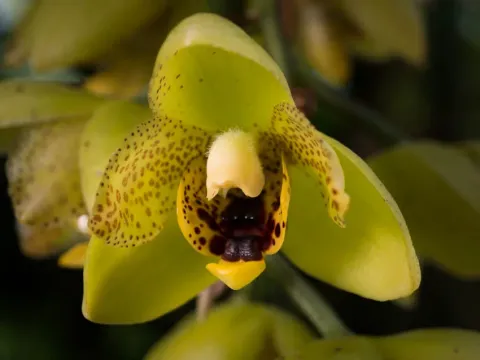
Acineta
Acineta
Acineta is a genus of fascinating epiphytic orchids belonging to the Orchidaceae family. Native to the tropical rainforests of Central and South America, these plants typically thrive in high-altitude environments, attaching themselves to tree trunks and branches.
What the section contains


Acineta
The botanical structure of Acineta is defined by robust, clustered pseudobulbs and broad, pleated leaves. A distinct characteristic is their inflorescence habit; the flower spikes are pendulous and grow downwards, which is why these orchids are best cultivated in hanging baskets or slatted wooden crates.
Regarding climate, these plants require high humidity levels, ideally around 70%. Proper air circulation is critical, as stagnant air can lead to fungal issues and heat stress, especially during the warmer months of the active growing season.
The growing medium must be highly porous and well-draining to mimic their natural epiphytic lifestyle. A mixture of pine bark, charcoal, and sphagnum moss is the preferred substrate, allowing roots to breathe while maintaining consistent moisture levels.
Lighting requirements for Acineta are moderate. They thrive in bright, indirect light conditions. Avoiding direct, harsh sunlight is crucial, as it can severely scorch the foliage and lead to dehydration of the pseudobulbs, affecting future blooming capacity.
The most common pests affecting Acineta include scale insects and mealybugs, which tend to hide in the crevices between the pseudobulbs. Integrated pest management, including regular inspection and the use of insecticidal soaps, is recommended for healthy growth.
Pathogenic threats such as bacterial soft rot and root rot occur frequently if the substrate remains saturated for too long. Ensuring adequate drainage and avoiding water stagnation in the crown of the plant are essential cultural practices to prevent these diseases.