
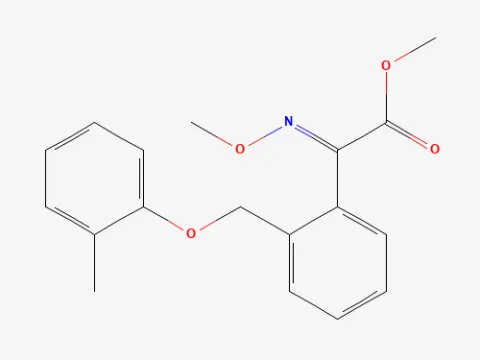
Kresoxim-methyl
Kresoxim-methyl belongs to the strobilurin class of fungicides. It acts by inhibiting mitochondrial respiration in fungi, effectively blocking electron transfer at the cytochrome b-c1 complex.
What the section contains
Kresoxim-methyl
The substance possesses both preventive and curative properties. Its unique feature is the ability to redistribute in the gas phase, providing protection to plant parts not directly hit by the spray.
Kresoxim-methyl disrupts spore germination and mycelium development. Because of its targeted metabolic effect, it remains effective against fungal strains that have developed resistance to older fungicide classes.
Beyond its antifungal effects, the substance improves the physiological condition of plants. It enhances chlorophyll retention, thereby extending the photosynthetic period and increasing final crop yields.
The formulation exhibits excellent adhesion to leaf surfaces, offering resistance against wash-off by precipitation. This stability ensures long-lasting protection even under fluctuating weather conditions.
Kresoxim-methyl is utilized to control a broad range of pathogens including Ascomycetes, Basidiomycetes, and Deuteromycetes. It is particularly effective against various foliage diseases.
In orchards, it is a standard choice for managing apple and pear scab, as well as powdery mildew. It helps maintain the quality and aesthetic value of the harvest significantly.
Vineyards benefit greatly from its application, as it provides reliable control over powdery mildew (oidium). Its prophylactic use is crucial for maintaining vine health throughout the growing season.
Vegetable crops are protected from numerous leaf spots and rusts using this active ingredient. It is also suitable for ornamental plantings prone to fungal infestations during humid weather.
- Apple and pear scab
- Powdery mildew on various crops
- Grapevine oidium
- Rust diseases
- Various leaf spot pathogens
Application rates vary depending on the target crop and disease pressure. Standard agricultural practices involve dosage ranges from 0.1 to 0.4 liters per hectare, depending on the product concentration.
Timing of application should ideally coincide with the early stages of disease development or as a preventive measure before infection occurs. Monitoring weather forecasts is essential for effective timing.
To avoid the build-up of fungal resistance, it is mandatory to rotate Kresoxim-methyl with other fungicides having different modes of action. Limit the number of seasonal applications to those specified by regional guidelines.
Compatibility with other pesticides should be checked prior to tank mixing. Always ensure uniform spray coverage for maximum protection, especially on dense foliage.
Optimal spray volume ensures the active ingredient reaches all necessary parts of the canopy. Avoid application during intense heat or high wind speeds to reduce drift and maximize chemical uptake.
Kresoxim-methyl is toxic to aquatic organisms. Strictly avoid contaminating streams, ponds, or drainage systems during application or while cleaning equipment.
Strict adherence to pre-harvest intervals is required to ensure food safety. Always check the label for specific timelines between the last application and harvest dates for each crop.
Personal protective equipment (PPE) must be worn during preparation and spraying. Avoid inhalation of vapors and direct contact with the skin or eyes at all times.
Store the product in a cool, dry, and secure location away from the reach of children and livestock. Keep original labels attached to ensure correct handling and dosage information is always available.
Dispose of empty containers and unused chemicals in accordance with environmental waste regulations. Never reuse containers for any purpose, even after thorough cleaning.