
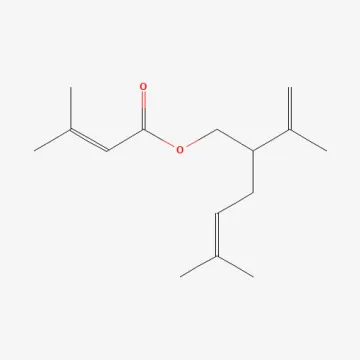
Lavandulyl senecioate
Description
Mode of action
Lavandulyl senecioate is an organic ester that functions as a powerful sex pheromone for various insect species. In modern agriculture, it is classified as a semiochemical agent, specifically designed for mating disruption programs.
The core mechanism of action is the saturation of the atmosphere with the synthetic pheromone, which mimics the natural signals released by females. This creates a confusing environment for males, preventing them from locating potential mates effectively.
By preventing successful mating, the population density of the targeted pest significantly declines over time. This approach effectively breaks the pest's reproductive cycle without the use of broad-spectrum contact neurotoxins.
Unlike traditional insecticides, this substance is highly specific. It targets only the pest species that respond to this particular chemical signal, leaving the beneficial insect population, such as predators and pollinators, unharmed.
The effectiveness of this method is based on a steady, controlled release rate of the compound from specialized dispensers. This maintains a consistent pheromone pressure throughout the flight period of the target insect.
What it targets
Lavandulyl senecioate is primarily used to control specific lepidopteran pests and mealybug species (family Pseudococcidae), which are known to cause severe damage to fruit orchards and vineyards.
It is widely utilized in high-value greenhouse crops, where chemical control is restricted or where organic compliance is a mandatory requirement for growers.
The compound is highly effective for monitoring and controlling pests with high reproductive rates, helping to suppress population surges that would otherwise lead to massive economic losses.
It serves as an essential tool in integrated pest management (IPM) strategies, allowing growers to transition away from heavy reliance on chemical pesticides while maintaining high product quality.
Application is particularly effective in large-scale areas where synchronized pest emergence occurs, allowing the pheromone to act across the entire habitat of the pest.
Rates and timing
The application rate is typically measured by the number of dispensers per hectare, which is determined based on the specific pest density, crop architecture, and regional historical data on pest pressure.
Dispensers should be deployed in the field approximately 7 to 14 days before the expected peak of adult insect flight to ensure the mating disruption field is already established when the moths emerge.
Uniform placement throughout the treated area is critical. Growers must follow a grid pattern or specific density recommendations to ensure there are no gaps where the pheromone concentration falls below the threshold.
The active lifespan of these dispensers can range from two to three months, covering the most critical reproductive phases of the pests during the growing season.
Regular monitoring of the insect population using trap counts is advised to evaluate the performance of the mating disruption system and confirm the timing of the dispenser replacement if necessary.
Restrictions
While Lavandulyl senecioate is a bio-based agent, handlers should always wear basic protective equipment such as gloves to avoid unnecessary skin contact during the installation process.
The compound is sensitive to environmental factors like intense UV radiation and extreme heat, which can lead to rapid degradation. Proper storage in a cool, dry, and dark place is mandatory to maintain potency.
At the end of the season, all used dispensers must be collected and disposed of according to agricultural waste management protocols to prevent plastic pollution in the orchard or field.
Avoid placing other chemical treatments or sulfur-based applications in close proximity to the pheromone dispensers, as strong odors can mask the signal and reduce the effectiveness of the disruption.
There are no re-entry restrictions or pre-harvest intervals (PHI) associated with this product, as it does not leave toxic residues on the crops or the environment.
Status in the European Union
Approved in the EU
- CAS number
- 23960-07-8
- Approved from
- 03.06.2020
- Approval until
- 03.06.2035
- ADI
- Not appl.
- ARfD
- Not appl.
- AOEL
- Not appl.
EU status is for reference only and does not replace national registration in your country.