
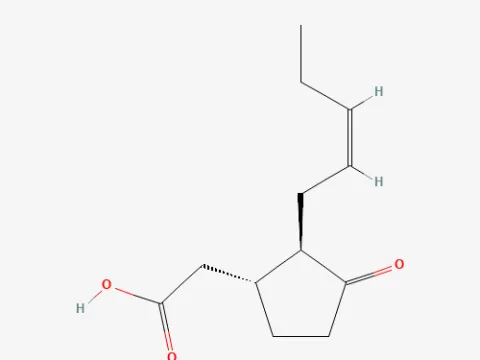
Jasmonic acid
Jasmonic acid and its derivatives, collectively known as jasmonates, are essential plant signaling molecules that act as internal regulators for plant defense mechanisms.
What the section contains
Jasmonic acid
The primary mechanism of action involves the activation of specific signaling pathways that trigger the expression of defense-related genes. This process prepares the plant to respond more rapidly and effectively to external threats.
Upon perception of stress, jasmonates initiate the production of various secondary metabolites, such as protease inhibitors and volatile organic compounds, which directly impact herbivore performance.
Jasmonic acid works in coordination with other hormonal networks, particularly those involving ethylene and salicylic acid, to balance growth-defense trade-offs within the plant.
By stimulating the production of phytoalexins, jasmonic acid strengthens the chemical defenses of plant tissues, creating an inhospitable environment for necrotrophic pathogens.
This group of substances is primarily used to increase resistance against chewing herbivores, including various species of caterpillars, beetles, and other leaf-damaging insects.
Jasmonates show efficacy in mitigating the impact of necrotrophic fungal infections, such as those caused by Botrytis cinerea or Fusarium species, which attack plant tissues.
Beyond biotic threats, jasmonic acid is highly effective in priming plants against abiotic stresses, including drought, high salinity, and extreme temperature fluctuations.
Key crops that benefit from jasmonic acid application include greenhouse vegetables, potatoes, oilseed rape, and various orchard crops where integrated pest management is essential.
It is also used to prime seedlings, ensuring that young plants are more capable of surviving transplanting shock or early-season pathogen pressure in the field.
Application rates are typically low, focusing on triggering biological responses rather than saturating the plant with high concentrations of active ingredients.
Optimal timing for application is critical; it is most effective when applied before the onset of the expected stress, allowing the plant sufficient time to activate its chemical defenses.
Repeat applications are often required to maintain the induced resistance state throughout the critical periods of plant development or high pest pressure.
The stability of the solution in spray tanks must be monitored, as certain environmental conditions can influence the degradation rate of jasmonic acid analogs.
Professional agronomists recommend integrating these treatments into the plant's phenological cycle, targeting specific growth stages where the plant is most vulnerable to environmental impact.
A significant limitation is the energy cost of maintaining an elevated defense state; excessive application can lead to a reduction in biomass accumulation and overall yield potential.
Jasmonic acid is not intended to replace systemic insecticides or fungicides in cases of severe infestations or widespread disease outbreaks; it serves as a supplement to IPM programs.
Storage conditions are vital, as the potency of jasmonates can decrease significantly if exposed to heat, light, or moisture for extended periods before application.
Users should be aware that the plant's sensitivity to jasmonates may vary depending on the genotype, soil fertility, and current physiological status of the crop.
While naturally occurring, standard safety protocols including the use of protective clothing are required when handling concentrated formulations to avoid skin or respiratory irritation.